In this article
- Escalation in the Middle East: What Happened and Where It Stands
- World's Oil & Gas Stuck: Strait of Hormuz Closure Triggers Energy Price Shock
- Supply Chains: Rerouting, Delays, and Just-in-Time Collapse
- US Energy Dominance Under Pressure
- Manufacturing: Cost Inflation and Production Risk
- Scenario Analysis: 7 Days vs. 4+ Weeks
- Predicted Impact of the Conflict on Critical Raw Materials
- Construction: Energy and Material Cost Pressures
- Impact on the US Industry
- Insurance: Coverage Gaps, Rate Surges, and Claims Risk. Marine and War Risk
- Strategic Outlook and Key Variables to Watch
The US-Iran conflict has immediate and cascading implications for oil and gas and all sectors central to industrial risk management in America. This briefing provides a breakdown of geopolitical risks and their impact on global supply chains.
When Iran's most critical shipping lane went dark, it didn't just disrupt oil markets — it exposed how fragile global supply chains really are. Now, with 20% of the world's petroleum locked behind a war zone, American industry faces its biggest logistics crisis in decades.
Escalation in the Middle East: What Happened and Where It Stands
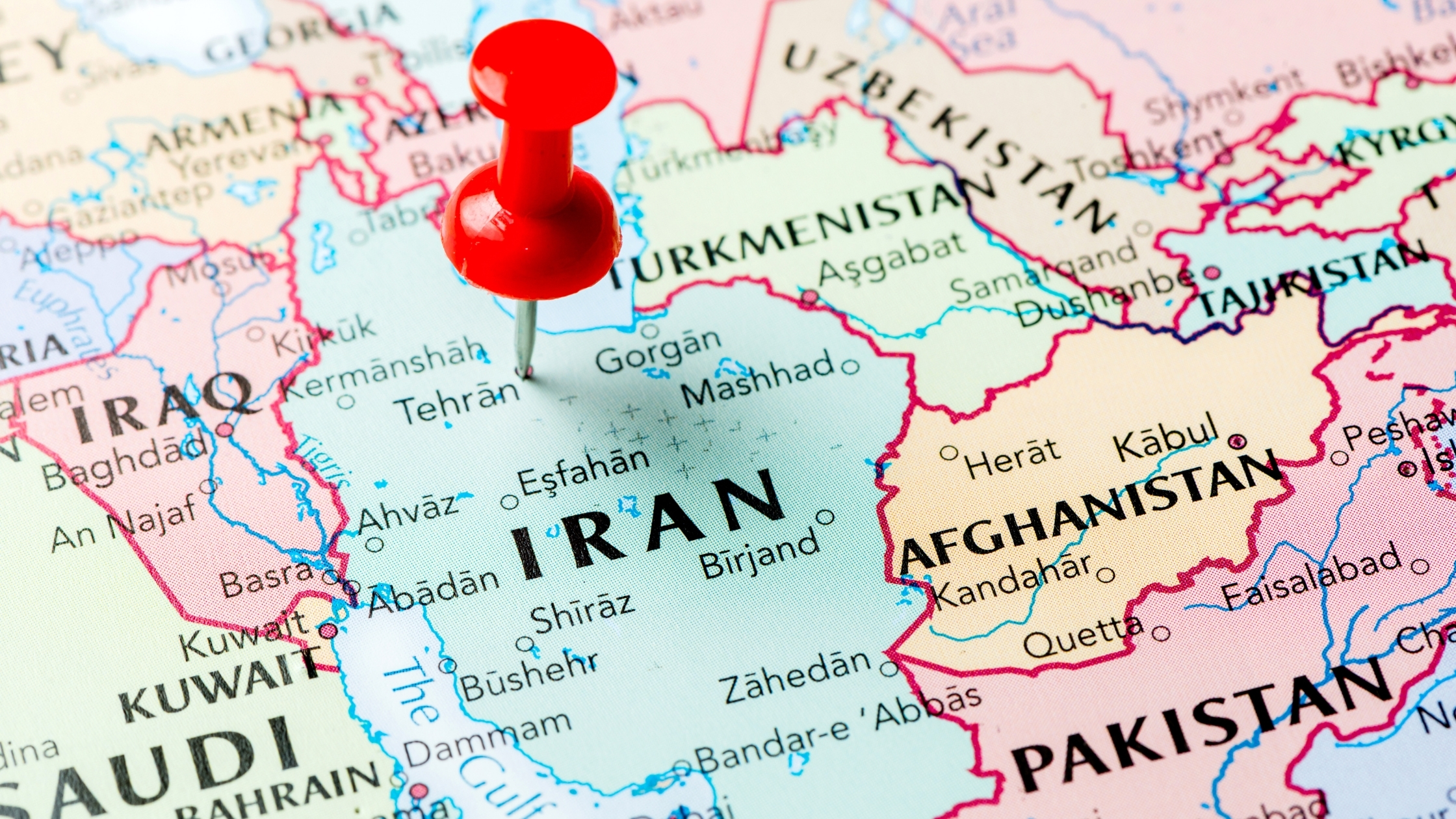
On February 28, 2026, the United States and Israel launched coordinated military strikes on Iran — codenamed Operation Epic Fury by the Pentagon and Operation Roaring Lion by Israel — targeting military facilities, leadership compounds, and defense infrastructure across Tehran, Isfahan, Qom, Karaj, and Kermanshah. The strikes killed Supreme Leader Ali Khamenei and several senior Iranian officials. As of March 6, 2026 (Day 6), the conflict continues with Iran retaliating via missile and drone strikes across the Middle East.
The strikes were preceded by the largest US military buildup in the Middle East since the 2003 invasion of Iraq, beginning in late January 2026. Indirect nuclear negotiations mediated by Oman collapsed after three rounds of talks in Geneva failed to produce a deal. Trump authorized the strike after reportedly receiving intelligence that Iran was planning a preemptive missile launch, though this claim has been disputed by American intelligence agencies and Pentagon officials.
Vice President JD Vance has stated that the primary goal is to ensure Iran
can never possess a nuclear weapon
President Donald Trump says combat will continue in Iran until these objectives are complete. He also stated:
Our objective is to defend the American people by eliminating imminent threats from the Iranian regime.
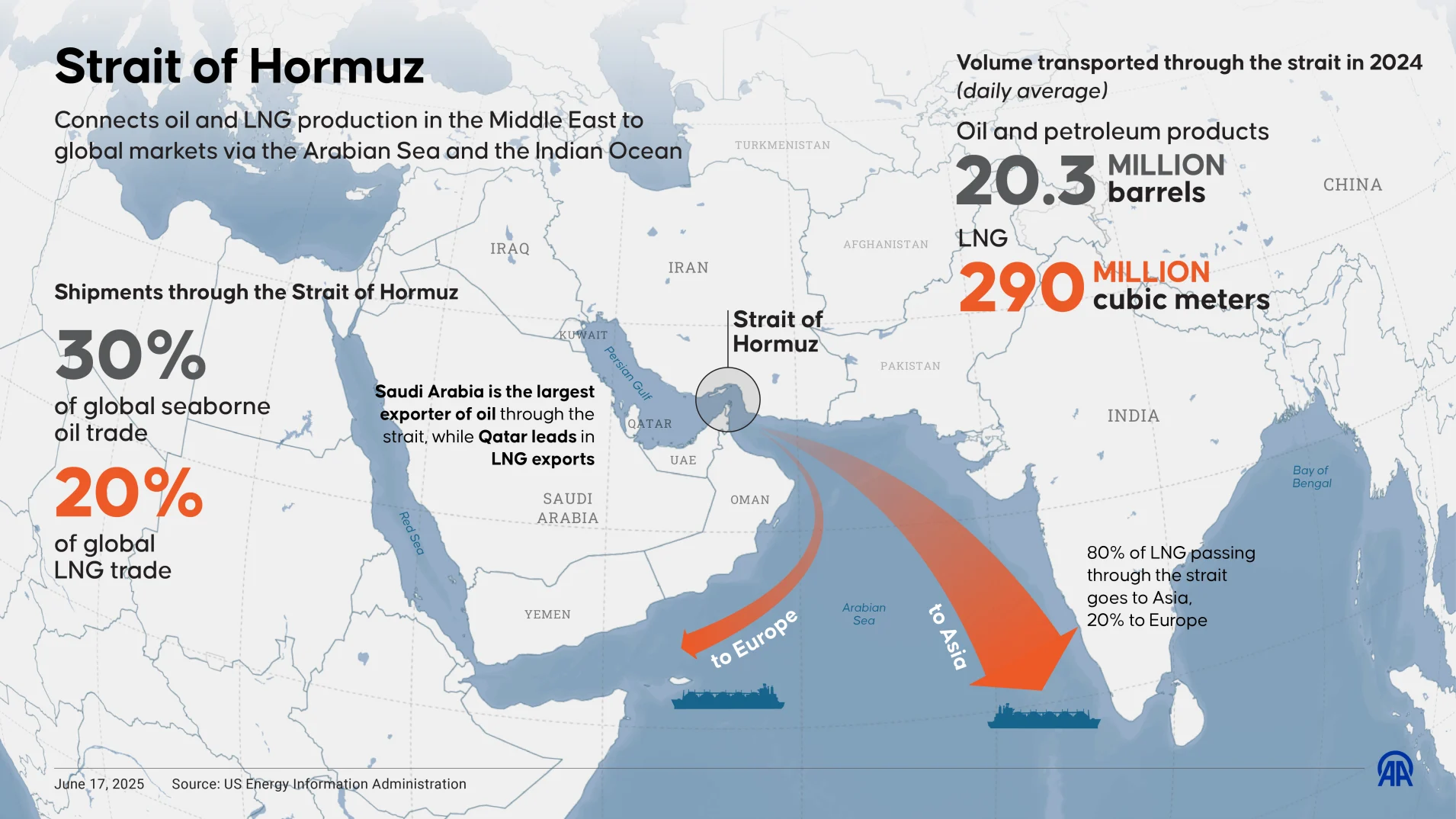
The US-Israeli military strikes on Iran have shut down the Strait of Hormuz — the narrow passage that carries 20% of the world's oil. Since the world's most critical oil chokepoint is closed, it is disrupting global energy flows, suspending major carrier bookings, and forcing global shipping into weeks-long detours around Africa. And for American manufacturers, contractors, and risk managers, the downstream effects are just beginning.
The Penn Wharton Budget Model estimates the direct cost to US taxpayers at $65 billion, with the total economic impact potentially reaching $210 billion before accounting for oil market disruption.
World's Oil & Gas Stuck: Strait of Hormuz Closure Triggers Energy Price Shock
On March 2, a commander of the Islamic Revolutionary Guard Corps (IRGC) declared the Strait of Hormuz "closed" — threatening to attack any vessel attempting to pass through the narrow passage that carries 20% of the world's oil and significant volumes of LNG every day.
Four tankers hit. Two sailors dead. One ablaze in a Bahrain port. And 150 ships sitting anchored in open Gulf waters with nowhere to go. That's the picture Reuters captured on March 2 — three days into the US-Iran conflict — as commercial shipping through the Strait of Hormuz ground to a near halt.
The commodity price jumps are amplified by a freight rate crisis that multiplies the cost impact across every supply chain touching the Middle East.
- Chartering a supertanker from the Middle East to China now costs $423,736 per day — more than double what it cost on February 27, itself already a six-year high.
- LNG tanker rates jumped over 40% in a single day after Qatar halted production.
- War risk insurance premiums, where coverage is still available at all, shot from 0.2% to over 1% of a ship's value in 48 hours — adding hundreds of thousands of dollars to every single shipment.
Supply Chains: Rerouting, Delays, and Just-in-Time Collapse
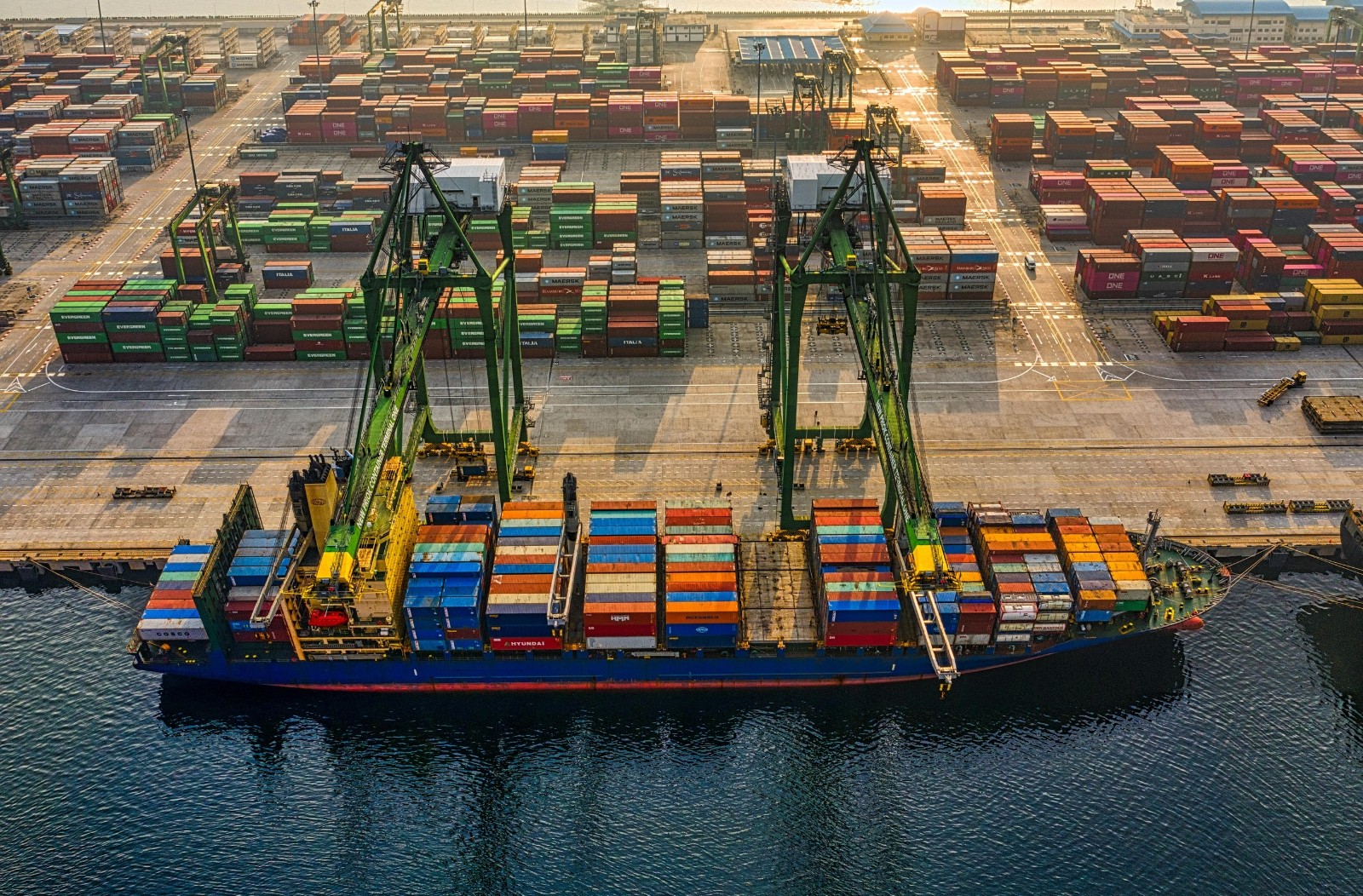
Major global shipping and logistics firms — including Maersk, MSC Group, CMA CGM, Hapag-Lloyd, COSCO, and Emirates SkyCargo — have either limited or completely suspended new bookings for the Gulf region. The ships that do keep moving aren't going through Hormuz, but around Africa. The Cape of Good Hope detour adds 10 to 14 days per leg, which is a fundamental reset of global fleet turnover cycles that will take months to unwind.
According to Kennedy's Law statistics, 135,000 containers are currently in transit in the region with estimated values of $4 billion. War risk insurance premiums for Middle East routes have already tripled. Some insurers aren't offering coverage at any price.
For industries built on just-in-time delivery — automotive, electronics, construction materials, industrial components — this is the complete breakdown.
US Energy Dominance Under Pressure
The Trump administration has argued that record US oil production (13.6 million barrels/day) and the country's position as the world's top crude producer and gas exporter provide a buffer against Middle Eastern disruption. Interior Secretary Doug Burgum previously stated:
We don't import any oil from the Strait of Hormuz anymore,
framing this as strategic latitude.
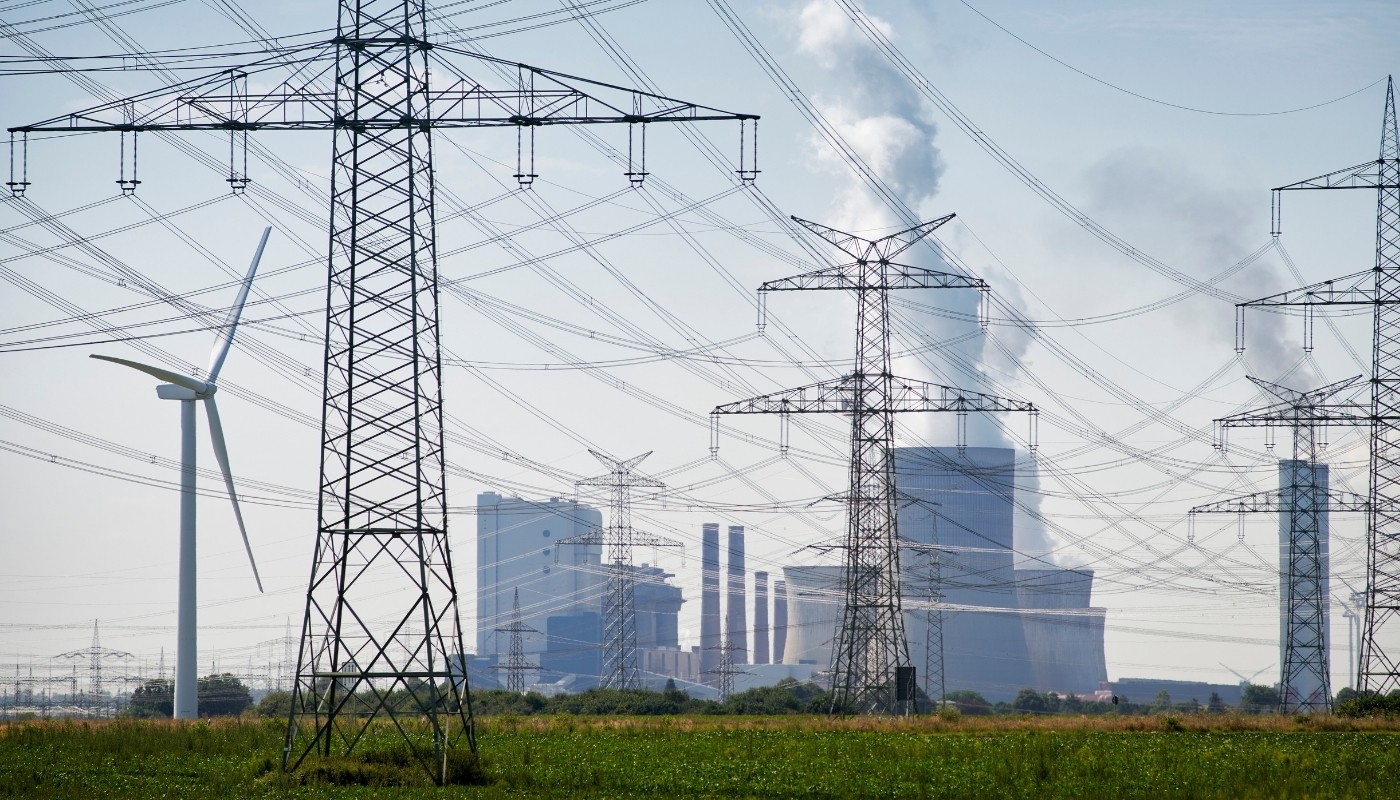
However, oil is a globally priced commodity. Even though the US does not directly import from the Gulf, sustained closure of the Strait would tighten global supply, pushing prices higher everywhere. S&P Global's head of crude oil analysis warned that if the Strait remains closed for several weeks, prices could exceed $100 per barrel, creating hardship for American consumers. OPEC+ has announced an April supply increase of 206,000 barrels/day (up from 137,000 previously considered), but this oil cannot reach consumers if the Strait is blocked.
Disruptions of Energy Production
As The New York Times points out, Iran's retaliatory strikes have directly impacted Gulf energy production. QatarEnergy — one of the world's largest LNG exporters — halted production after Iranian drones struck facilities at Ras Laffan. Saudi Arabia shut operations at the Ras Tanura refinery following a drone-induced fire. Israel temporarily closed offshore natural gas fields, including the Chevron-operated Leviathan field, as a precaution.
Manufacturing: Cost Inflation and Production Risk
The conflict impacts manufacturing through three primary channels: energy costs, logistics disruptions, and raw material shortages. Energy costs account for a significant proportion of total production expenses in:
- vehicle assembly,
- steel foundries,
- aluminum smelters,
- and chemical processing
— all among the most energy-intensive industrial facilities in existence.
Paint shops, body presses, powertrain machining, and other manufacturing operations all consume electricity at scale. When the marginal cost of energy rises sharply, the pain distributes itself throughout the supply chain within weeks, not months.
Scenario Analysis: 7 Days vs. 4+ Weeks
A detailed dual-scenario analysis from ARC Advisory Group outlines the divergent impact paths:
Factor | 7-Day Conflict | 4+ Week Conflict |
|---|---|---|
Energy costs | Elevated 1-2 months; oil at $100-110/bbl | Could double; oil at $120-150/bbl |
Shipping premiums | Elevated 3-6 months | 3-5x increase; some routes uninsurable |
Raw material disruptions | 1-3 months of scheduling issues | 3-6 months of structural cutoffs |
Manufacturing sectors affected | Auto, electronics, chemicals | Widespread; steel, cement, chemicals face suspensions |
Recovery timeline | 1-3 month adjustment | 1-2 years for supply chain recovery |
Predicted Impact of the Conflict on Critical Raw Materials
Iran is a significant global supplier of neon gas (used in semiconductor chip lithography) and methanol. As the predictions show, if the conflict lasts beyond 4 weeks, sustained military strikes could halt Iran's industrial production. It could interrupt exports and create capacity constraints across the global semiconductor industry — affecting automobiles, electronics, and AI hardware manufacturing. Shortages of chemical feedstocks such as sulfur and liquefied petroleum gas could further increase input costs and compress manufacturing margins worldwide.
Construction: Energy and Material Cost Pressures
The construction industry faces acute vulnerability due to its reliance on energy-intensive materials and fuel-powered equipment. Steel foundries and aluminum smelters, whose output feeds every stamping line and construction project, are among the most energy-intensive industrial facilities. Rising oil prices directly increase the cost of operating heavy machinery, transporting materials, and running job sites.
The automotive logistics analyst Daniel Harrison summarized the broader dynamic:
At a time when the automotive industry is struggling with a seeming permacrisis, including a $60 billion EV reset, the US-Iran war will not only have severe supply chain impacts, but also serious economic ramifications,
including higher energy and logistics costs, lower production volumes, reduced profit margins, and inflationary pressures that could drive up interest rates and capital borrowing costs, further delaying investments that were already postponed.
Impact on the US Industry
Assembly plants in Germany, the UK, the US, and Mexico will begin to feel the effects of delayed Asian component shipments within two to three weeks of any sustained closure. Buffer inventories, already thinned by years of lean manufacturing philosophy and post-pandemic supply chain reforms, are not sized for the additional transit time created by rerouting.
When transit periods extend by weeks, that model collapses,
—a logistics expert told NBC News:
Raw materials arrive late, components do not arrive as scheduled, and manufacturers experience the repercussions first. Consumers will soon feel the effects in the form of delays, reduced inventories, and escalating prices.
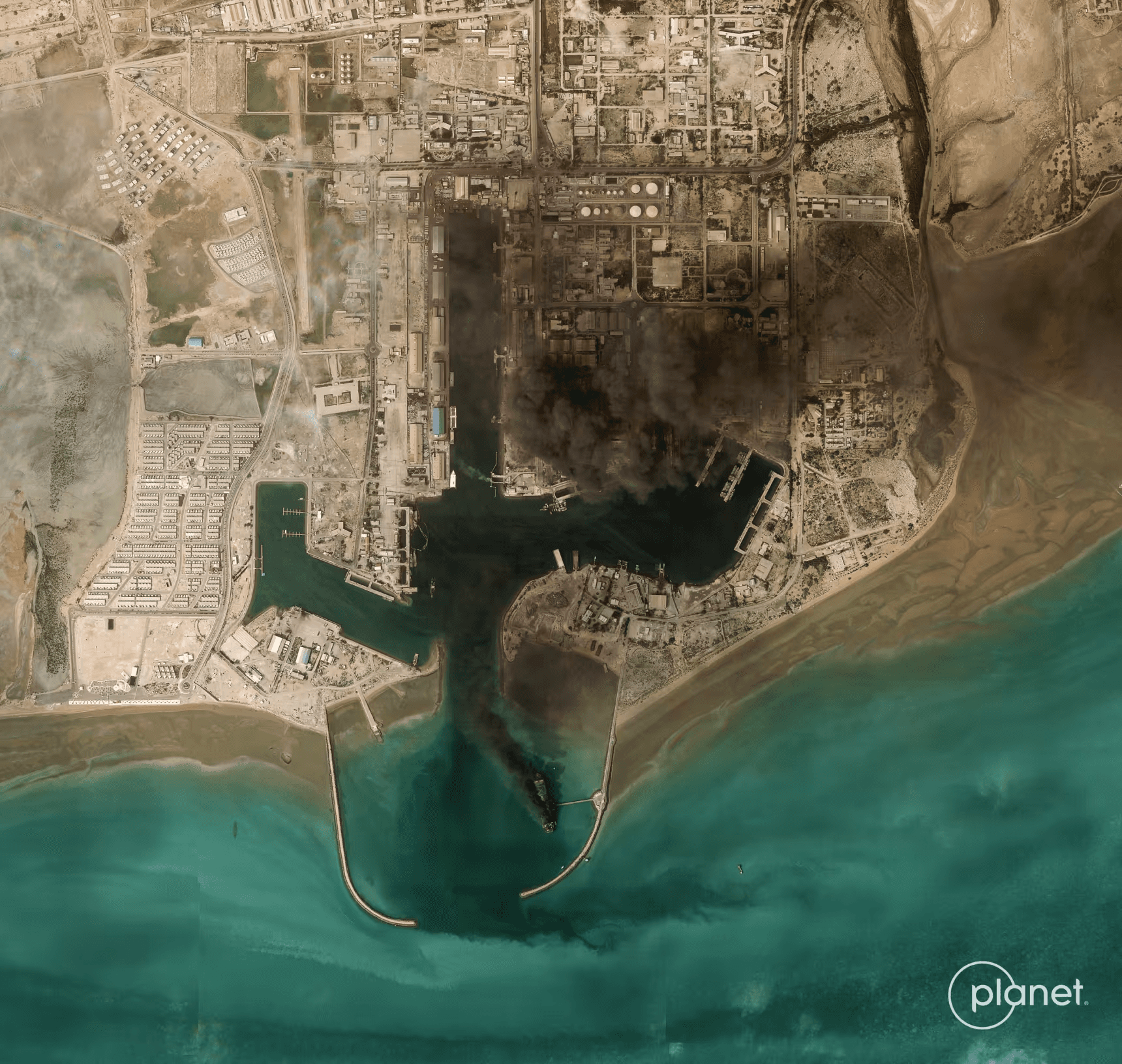
Smoke billows Monday after an explosion from the port of Bandar Abbas in Iran, along the strait of Hormuz. Source: Planet Labs
AM Best flagged marine, trade credit, and political risk insurance as likely to experience the most direct and immediate impacts.
Lines of Business at Risk:
Insurance Line | Key Risk | Impact Status |
|---|---|---|
Marine Hull/War Risk | Vessel damage, Strait closure, detentions | Policies cancelled; 25-50% rate increases |
Aviation | Grounded fleets, airport strikes, airspace closure | Significant hull and liability exposure |
Political Violence | Physical damage to assets across the Gulf states | Wave of claims expected |
Trade Credit | Obligor insolvency, sovereign debt stress | Claims spike likely if recession materializes |
Political Risk | Forced abandonment, operational cessation | Growing exposure in Gulf operations |
Energy | Infrastructure damage, production halts | Direct targeting of facilities ongoing |
Cyber | State-sponsored cyberattacks | Medium-term escalation risk |
Supply Chain | Delivery failures, contract frustration | Widespread claims if disruption persists |
Insurance: Coverage Gaps, Rate Surges, and Claims Risk. Marine and War Risk
The insurance market response has been swift and dramatic. Multiple marine insurers — including Skuld, Gard, NorthStandard, the London P&I Club, and the American Club — have issued cancellation notices for war risk coverage in Iranian waters, the Gulf, and surrounding areas, effective March 5. Japan's MS&AD Insurance has halted underwriting war risk policies for waters near Iran and Israel.
Kennedys Law highlights that even if a global recession does not materialize, there may still be contract frustration and trade credit claims if parties fail to honor contractual delivery obligations due to the Strait closure or disruptions in oil and LNG production. If the Gulf situation deteriorates further, claims under political risk policies for forced abandonment could emerge as Western companies pull personnel from the region.
According to Marsh's Marine Hull UK War Leader, near-term rate increases for marine hull insurance in the Gulf could range from 25% to 50%, barring any direct attack on merchant shipping, which could have "major repercussions across war insurance rates". Some underwriters have already cancelled annual hull war policies under standard 7-day war clauses.
S&P Global Ratings noted that the conflict
disproportionately affects specialty lines, a segment that insures complex or high-risk exposures, including war risk, aviation, energy, political violence, and other niche classes.
Strategic Outlook and Key Variables to Watch
The trajectory of industry risk depends on several critical variables:
- Duration of the Strait of Hormuz closure: The single most consequential factor for energy prices and global supply chains. If reopened within days, the shock is manageable. If closed for weeks, oil could exceed $100/barrel and trigger cascading disruptions.
- Escalation vs. de-escalation: Iran has signaled it will not negotiate, while the US insists it will continue strikes until objectives are met. Both sides appear to be pursuing strategies that expand the conflict in the short term to gain leverage.
- Damage to Gulf energy infrastructure: Strikes on Qatar's Ras Laffan LNG facility and Saudi Arabia's Ras Tanura refinery mark a dangerous precedent — targeting energy infrastructure globalizes the economic impact beyond the immediate theater.
- Federal Reserve response: Whether the Fed holds, hikes, or eventually cuts rates will shape borrowing costs for construction, manufacturing, and capital-intensive industries.
- Insurance market capacity: The withdrawal of war risk coverage creates an environment where commercial shipping may become operationally impossible in the Gulf, regardless of willingness to pay.
The conflict demands immediate attention to energy cost hedging, alternative logistics planning, insurance coverage review, inventory buffer assessment, and continuous geopolitical monitoring.
For industrial risk managers, general contractors, and supply chain professionals, the question is whether your risk management infrastructure is built to see it coming, respond fast, and protect your people, your vendors, and your margins.
For industrial companies looking to build resilience, Parakeet Risk offers vendor prequalification, supplier risk scoring, and compliance workflow.

Written by
Magdalena RucińskaContent Specialist
-1.jpg)