Noticias Industriales
16 abr 2026
Artemis II Mission: Cost Breakdown and Key Contractors Driving NASA's Lunar Exploration
As the first crewed flight beyond Earth's orbit since the final days of the Apollo program in 1972, Artemis II serves as the definitive proof-of-concept for a $93 billion industrial ecosystem. This mission is a working factory for the emerging cislunar economy, supported by a global web of over 2,700 suppliers.
After decades focused on the predictable logistics of Low-Earth Orbit (LEO), the aerospace sector is now scaling to meet the demands of deep space. In this report, we analyze the mission through an industrial lens, answering the high-stakes questions facing the global aerospace sector:
What specific revolutionary manufacturing techniques were utilized in the construction of the Artemis II mission?
Which "Titan" contractors provided the mission's industrial backbone?
What challenges did the global supply chain face with over 2,700 suppliers involved?
Does the $4 billion-per-launch price tag actually validate a sustainable lunar economy?
How will the success of Artemis II influence future missions beyond cislunar space?
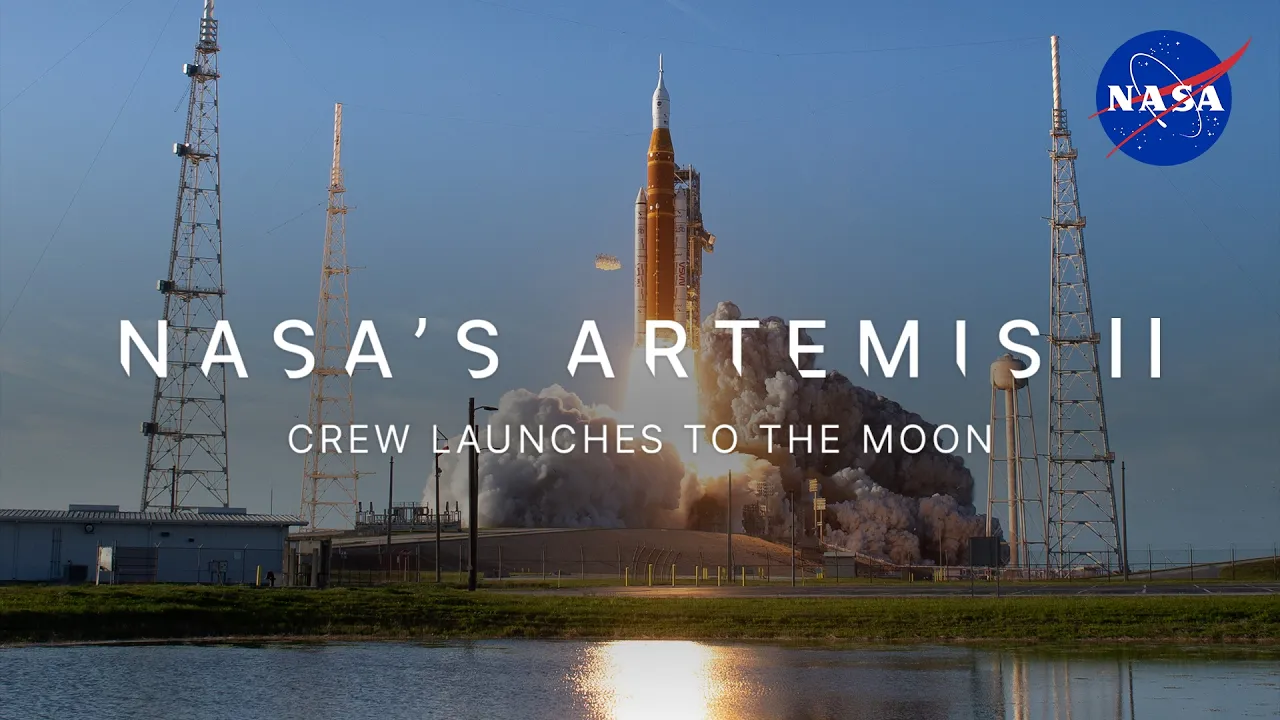
🛸 Here you can watch the official NASA coverage of the historic Artemis II launch.
The Titans of the Launchpad: Manufacturers Powering Artemis II
The success of Artemis II didn't just happen in the stars; it was manufactured in cleanrooms and assembly centers across the globe. This mission relies on an "Industrial Avengers" of prime contractors, each responsible for a critical piece of the lunar puzzle.
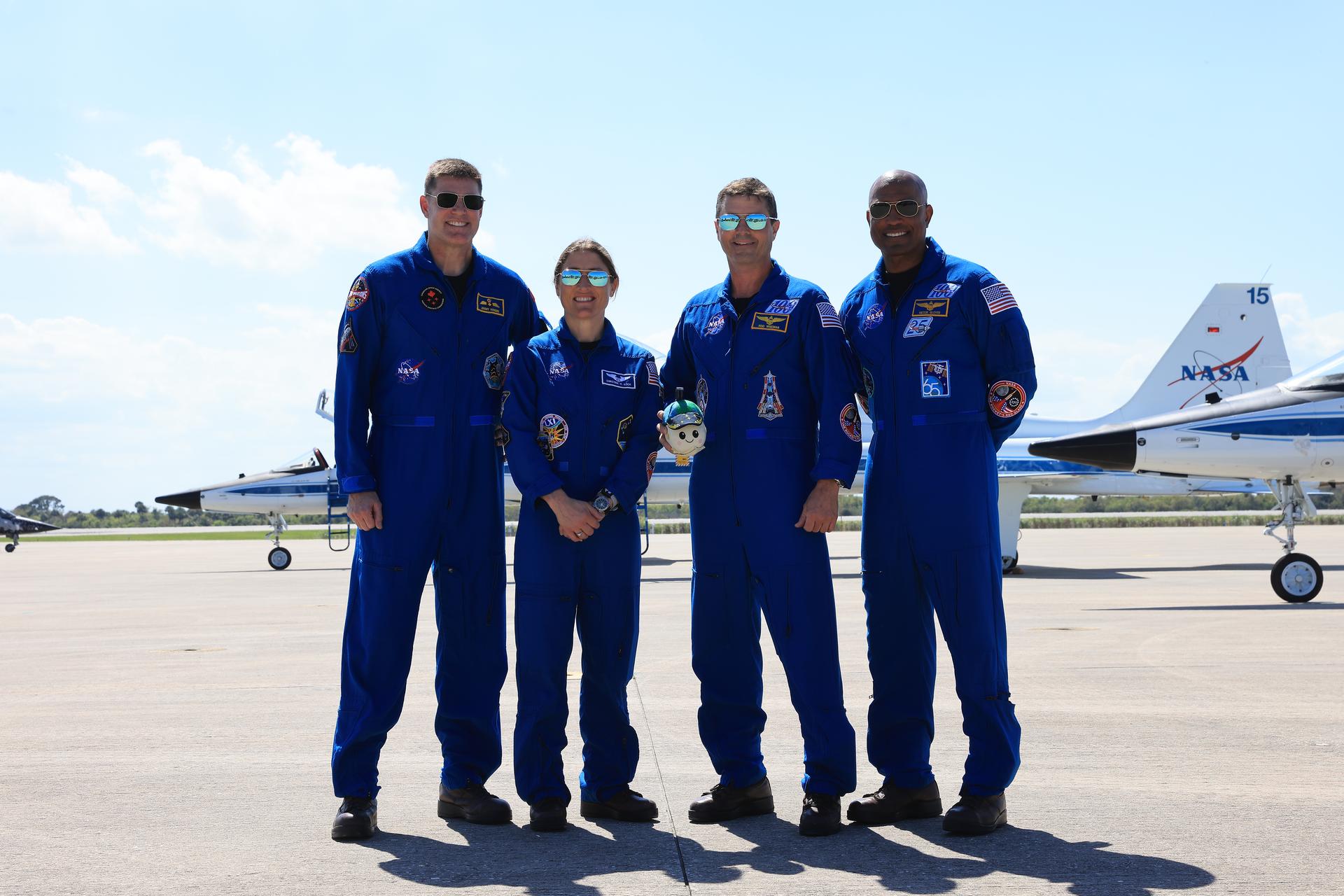
From left to right, Artemis II Mission Specialist Jeremy Hansen from CSA (Canadian Space Agency), Mission Specialist Christina Koch, Commander Reid Wiseman, and Pilot Victor Glover, arrive on Friday, March 27, 2026, at the Launch and Landing Facility at the agency’s Kennedy Space Center in Florida in preparation for the Artemis II test flight. Credit: NASA.
🧑🚀 The "Big Four" and Their Industrial Architects
The mission’s structural integrity rests on the shoulders of four primary aerospace giants. Under the leadership of Kelly Ortberg, Boeing leads the development of the core stage of NASA's Space Launch System (SLS), providing the heavy-lift launch rockets essential for sending astronauts beyond Earth's orbit.
Meanwhile, Lockheed Martin, led by CEO James Taiclet, delivered the Orion Crew Capsule. This is the astronauts' lifeboat, a sophisticated vessel designed to sustain a crew of four for 21 days in the harsh radiation environment of deep space. The spacecraft, named Integrity by its crew, represents the pinnacle of human-rated safety standards.
The Artemis II mission relies on a network of key contractors and manufacturers, each playing a vital role in the success of this crewed lunar exploration:
Contractor | Component | Key Leadership | Primary Role |
Boeing | SLS Core Stage | Kelly Ortberg (CEO) | Heavy-lift propulsion & integration |
Lockheed Martin | Orion Spacecraft | James Taiclet (CEO) | Crew safety, life support, & reentry |
Northrop Grumman | Solid Rocket Boosters | Kathy Warden (CEO) | Initial 75% of liftoff thrust |
L3Harris (Aerojet) | RS-25 Engines | Christopher Kubasik (CEO) | Liquid-fueled precision propulsion |
Northrop Grumman, steered by CEO Kathy Warden, supplied the massive five-segment Solid Rocket Boosters (SRB)—the two towering white pillars that generate more than 75% of the initial thrust needed to escape Earth’s gravity.
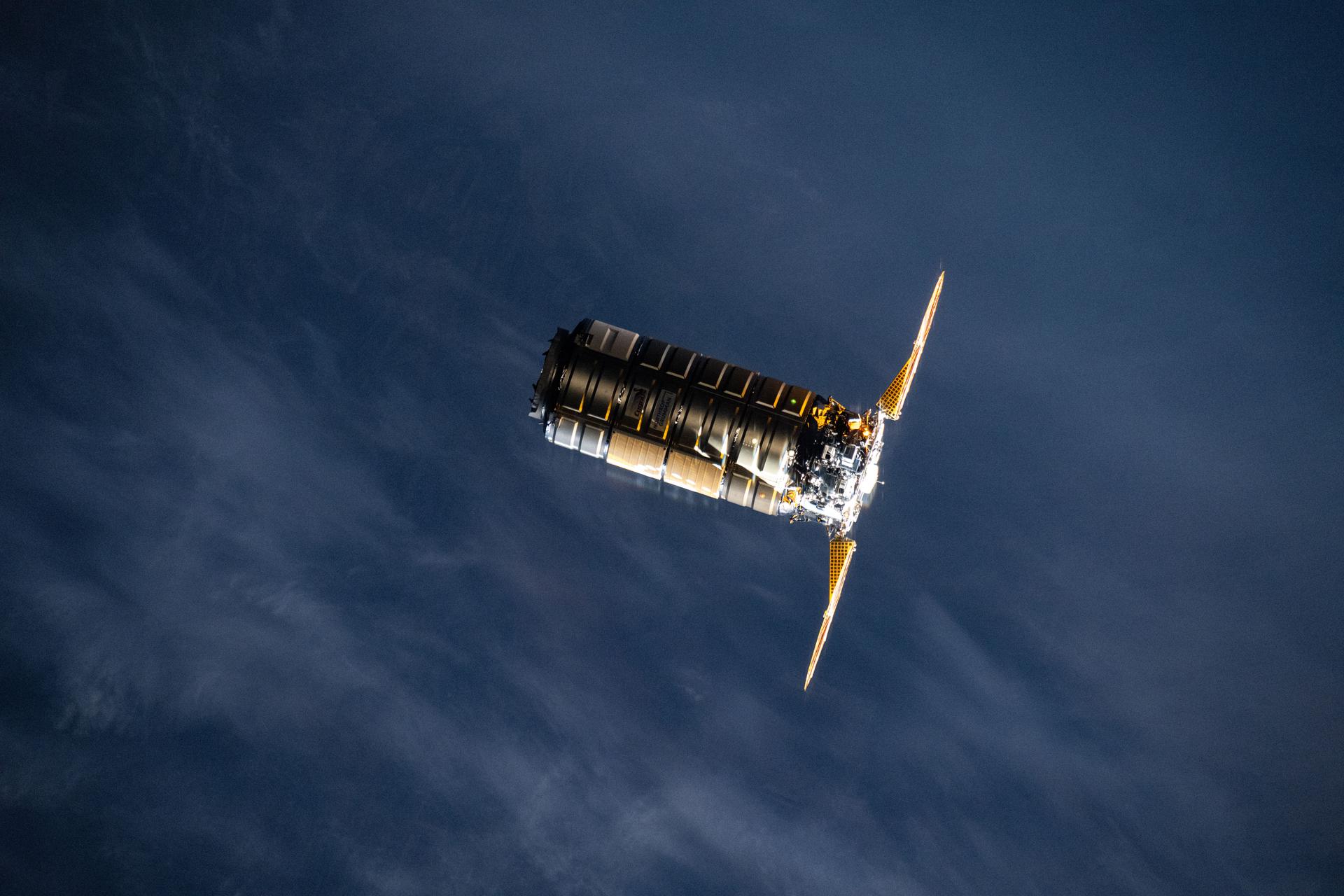
Northrop Grumman’s Cygnus XL cargo spacecraft, carrying more than 11,000 pounds of new science investigations and supplies for the Expedition 73 crew, approaches the International Space Station on Sept. 18, 2025. Credit: NASA
Northrop Grumman’s manufacturing relies on precise integration. In their facility at Wallops, technicians connect the Cygnus cargo module to its service module, aligning thousands of fluid and electrical connections with extreme accuracy.
For Artemis II, Northrop Grumman built the largest solid rocket boosters ever flown. At their state-of-the-art facility in Promontory, Utah, each booster was cast in five segments and then shipped to Kennedy Space Center for final stacking. This modular method allowed quality checks at every stage, ensuring precise energy release during flight.
Engineers and technicians from Aerojet Rocketdyne and Boeing at NASA’s Michoud Assembly Facility in New Orleans have installed the first of four RS-25 engines to the core stage for NASA’s Space Launch System rocket that will help power the first crewed Artemis mission to the Moon. The yellow core stage is seen in a horizontal position in the final assembly area at Michoud. One RS-25 engine, engine number E2059, has been installed in the top left corner at the base of the 212-foot-tall core stage. Photo credit: NASA
L3Harris (following its acquisition of Aerojet Rocketdyne) serves as the prime contractor for the liquid-fueled powerhouses — RS-25 engines. Under the leadership of CEO Christopher Kubasik, L3Harris has successfully transitioned these legendary engines from the Space Shuttle era into the high-performance requirements of the SLS.
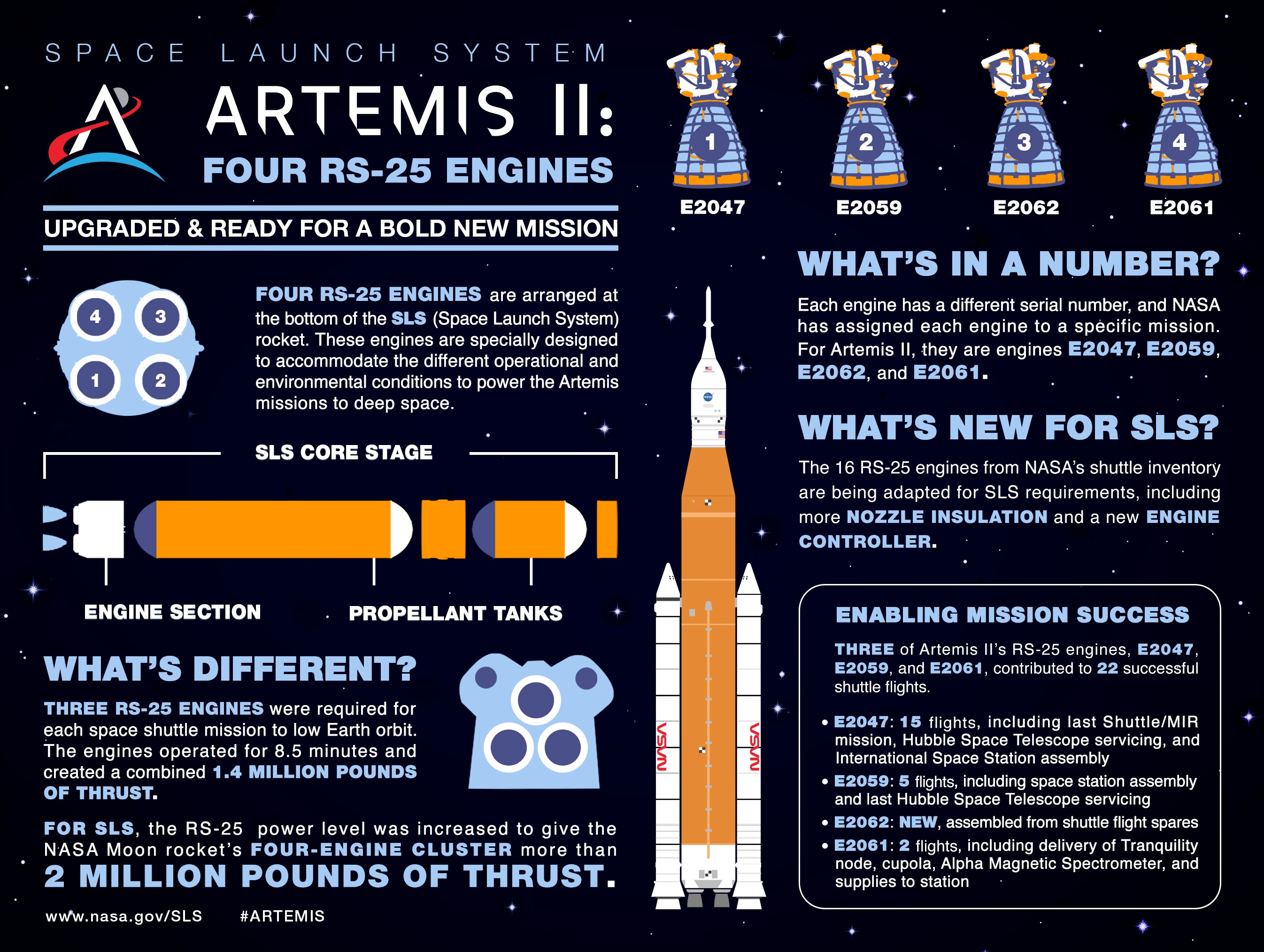
This infographic depicts the four RS-25 engines that are situated on NASA’s Space Launch System rocket for the Artemis II mission. Credit: NASA/Kevin O'Brien
Mounted at the base of the core stage, the four RS-25 engines provide more than two million pounds of combined thrust. During the eight-minute climb to orbit, they burn a mixture of cryogenic liquid hydrogen and liquid oxygen at temperatures ranging from -423°F to 6,000°F. This extreme thermal gradient requires specialized material science and precision manufacturing—much of which is now handled at L3Harris’s facility in DeSoto, Texas, and tested at the Stennis Space Center.
To modernize the RS-25 for the Artemis program, L3Harris implemented additive manufacturing (3D printing) for critical components like the pogo accumulator. This innovation allowed for the elimination of over 200 welds, reducing both the mass of the engine and the potential for structural fatigue.
Additionally, international partners such as the European Space Agency contribute the European Service Module, a key component of Orion, enhancing the spacecraft's propulsion and life support systems.
The Beating Heart of Orion: Airbus and the European Service Module
Manufactured by Airbus under the leadership of Marc Steckling, Head of Space Exploration, the European Service Module (ESM) serves as the heart of the Orion spacecraft. The role of this transatlantic engineering marvel was to sustain the crew once they leave the safety of our atmosphere.
Equipped with 33 engines, it includes a rebuilt Space Shuttle engine that gives the precise push needed to move around the moon. Its famous "X-wing" shape comes from four solar panels, each seven meters long, which together produce 11.2 kW of electricity—enough to power two average homes even in the dark of deep space.
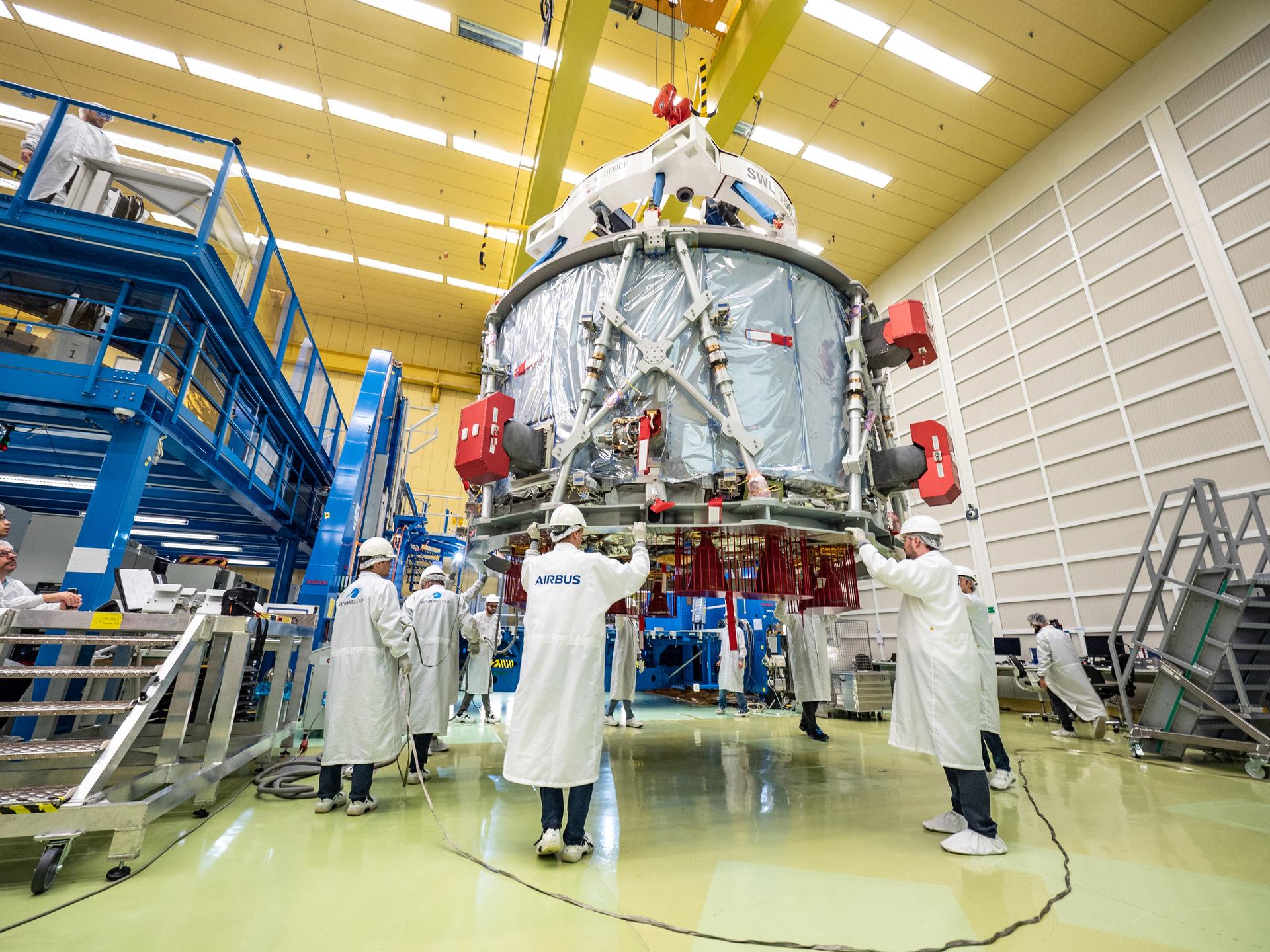
Technicians at the Airbus facility in Bremen, Germany prepare the European Service Module for shipment to Kennedy Space Center on Nov. 1, 2018. Image Credit: NASA/Rad Sinyak
The complexity inside the ESM is staggering. It is composed of more than 20,000 individual parts and components, woven together by nearly 12 kilometers of cabling. To keep up with the fast schedule of the Artemis program, Airbus changed its site in Bremen, Germany, into a high-tech space factory. These cleanroom areas were specially set up to handle three modules at the same time, making sure one ESM is delivered each year.
The ESM-2, specifically forged for the Artemis II mission, made its cross-Atlantic journey to Florida in October 2021, marking the final integration step before Orion became a fully functional deep-space vessel.
The New Guard: SpaceX and Blue Origin
As a central pillar of the Artemis campaign, NASA is collaborating with SpaceX to develop the Starship HLS (Human Landing System). This massive lander, which matches the 15-story height of a typical office building (about 165 feet or 50 meters), will serve as the primary transport link for astronauts traveling between lunar orbit and the Moon’s surface during the Artemis III and IV missions. To navigate its immense vertical scale, the HLS features a built-in elevator system designed to ferry both crew and cargo down to the Moon’s surface.
An elevator on Starship HLS will be used to transport crew and cargo between the lander and the Moon’s surface.
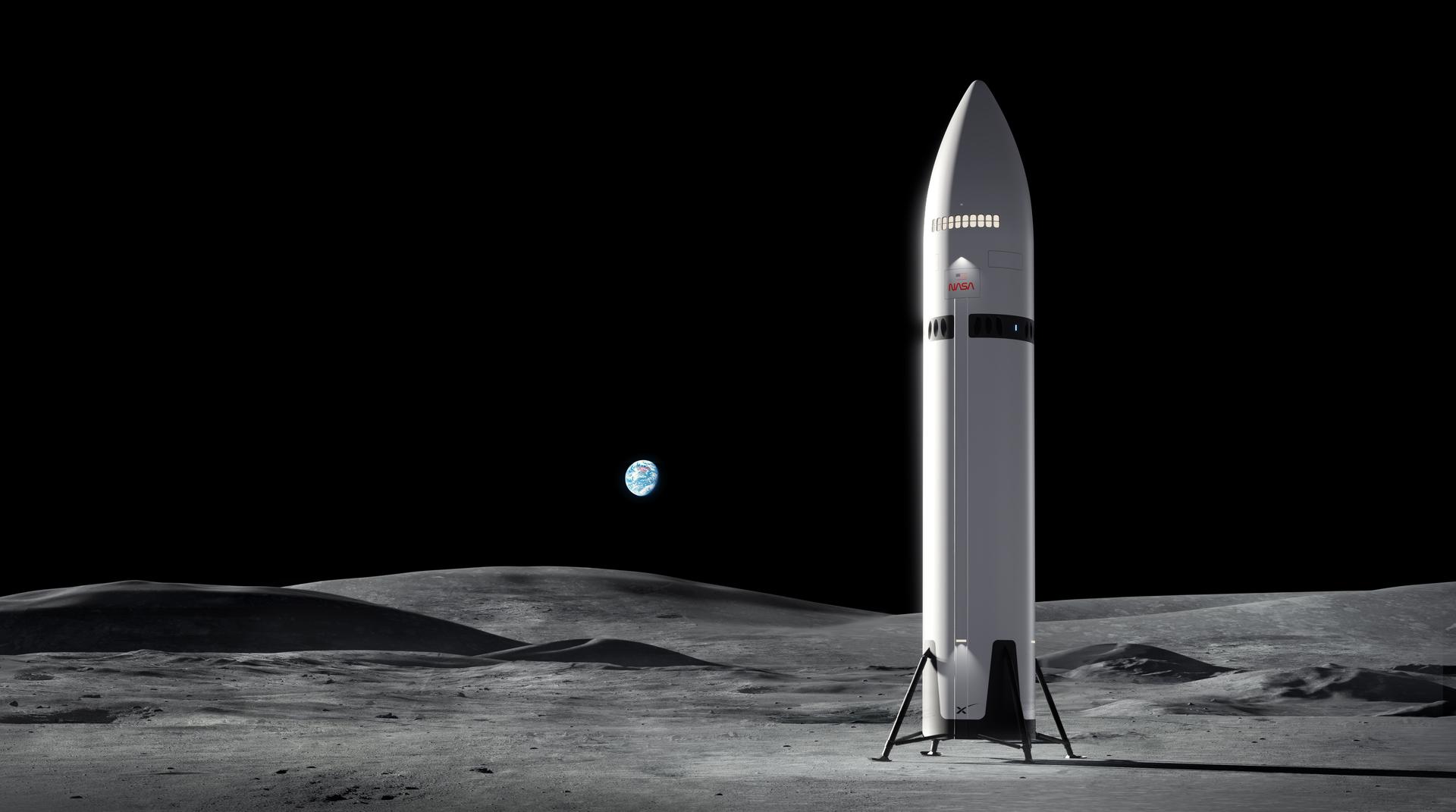
SpaceX’s Starship Human Landing System (HLS) on the Moon. Credit: SpaceX
The development of this specialized landing hardware represents a transition in the program’s strategy, which now relies on a "New Guard" of private contractors, primarily SpaceX and Blue Origin. While the Artemis II mission, which successfully launched on April 1, 2026, focused on verifying crewed lunar orbit and life support capabilities, these companies are now competing to provide the infrastructure for subsequent surface landings. SpaceX is currently refining the Starship HLS, while Blue Origin, under the leadership of CEO Dave Limp, is advancing the development of its own landing system.
🛰️ Rocket Manufacturing and System Integration: Advanced Material Science in SLS Construction
NASA is currently manufacturing the launch vehicles required for a series of upcoming lunar and deep-space missions. To optimize both the project budget and the development schedule, the agency utilizes flight-proven hardware and structural designs derived from the Space Shuttle and previous exploration programs. This "heritage" equipment is integrated with contemporary manufacturing technologies and high-precision inspection techniques to ensure mission readiness.
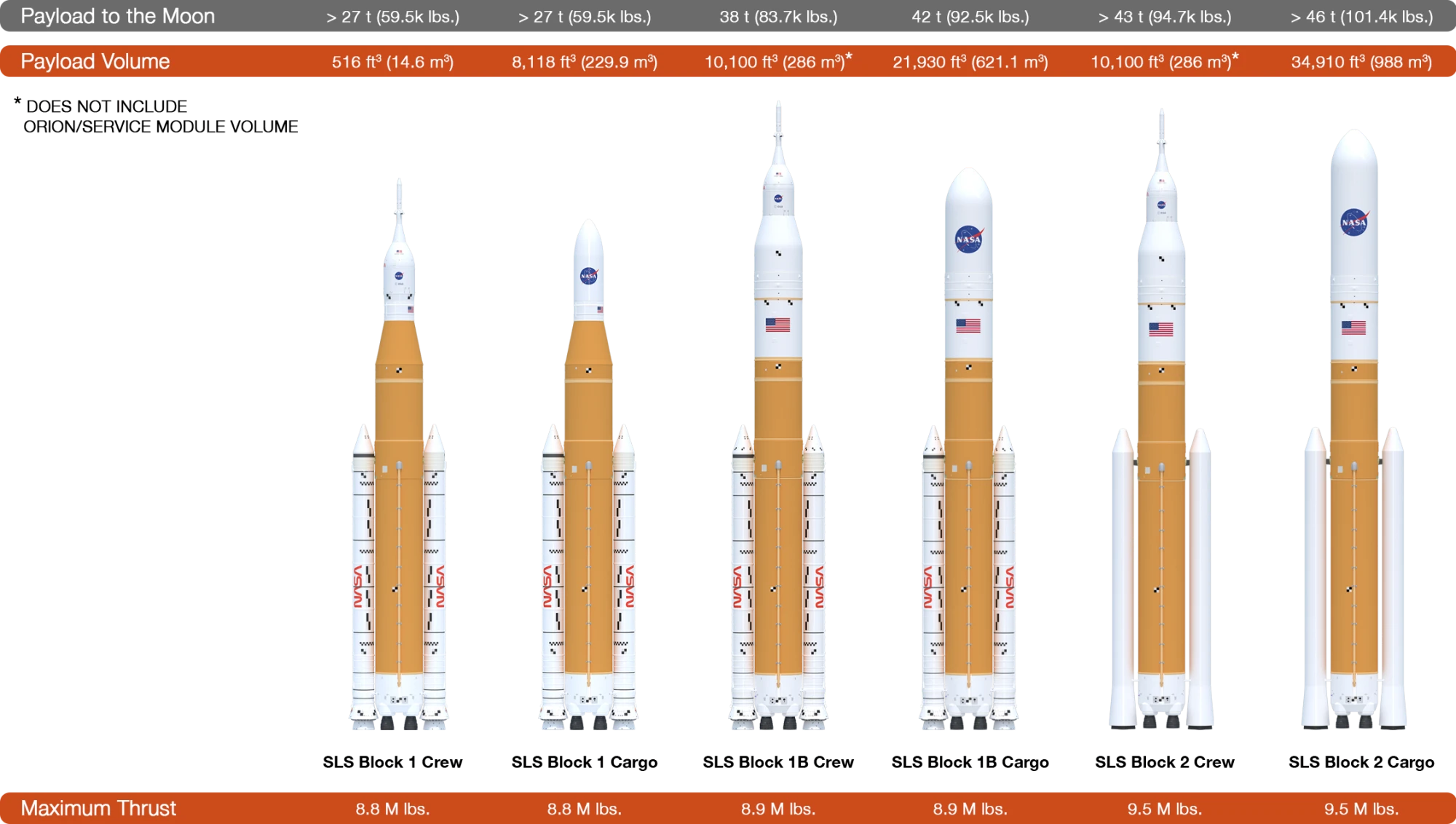
This roadmap illustrates the iterative development of NASA’s Space Launch System (SLS), showing the transition from the initial Block 1 configuration used for Artemis II to the high-capacity Block 2 variants intended for Mars-forward missions. Credit: NASA
The SLS is not a static vehicle but a modular system. By maintaining a consistent core stage while upgrading boosters and upper stages, NASA and its contractors (Boeing, Northrop Grumman, and Aerojet Rocketdyne) can increase performance without redesigning the entire industrial supply chain.
To meet the grueling demands of deep-space transit, NASA and its partners moved away from traditional craftsmanship toward revolutionary techniques that redefined the limits of spacecraft durability.
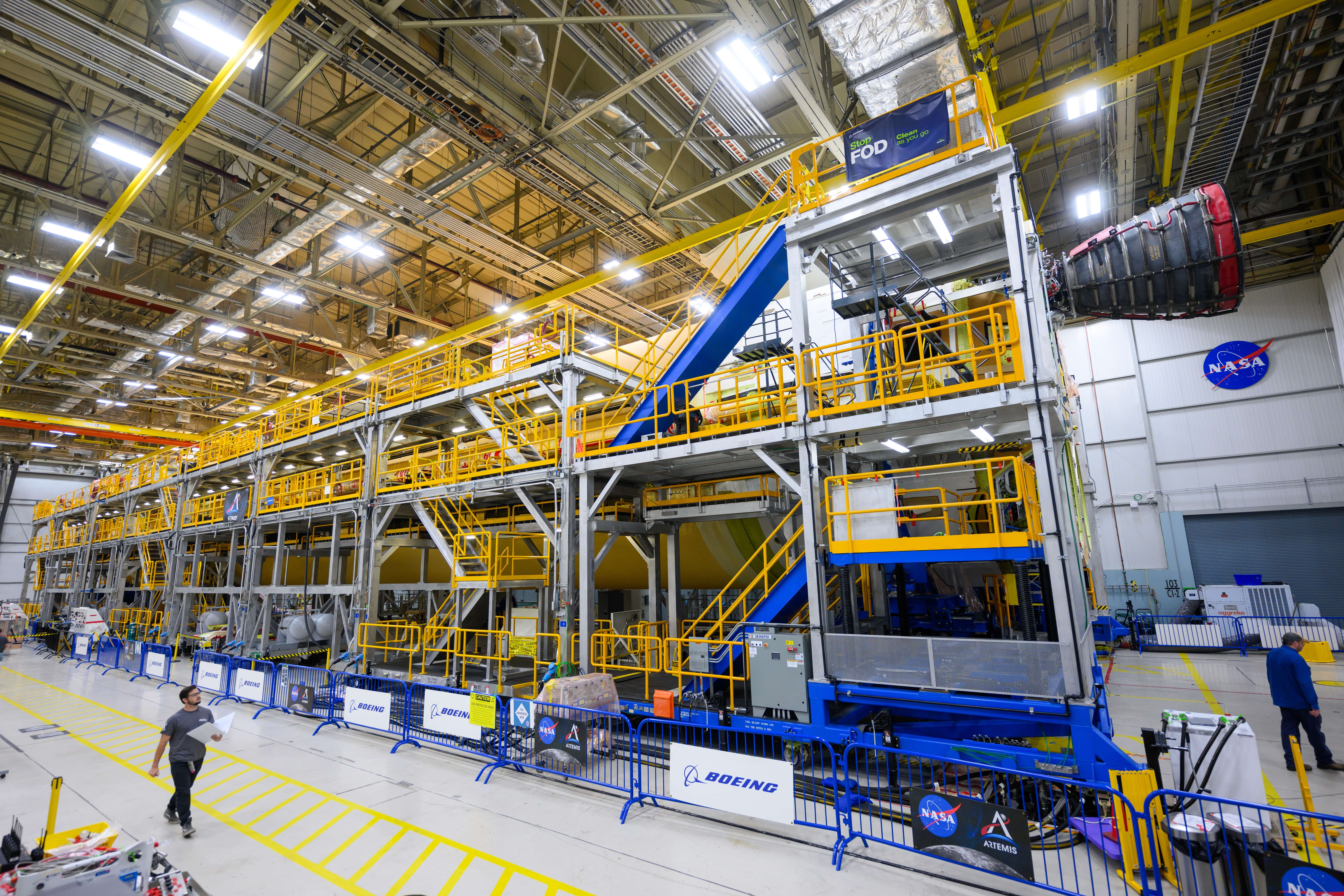
At the heart of the Michoud Assembly Center stands the 170-foot Vertical Assembly Center (VAC), the largest machine of its kind. Here, the SLS core stage tanks were fused using Friction Stir Welding. Unlike traditional welding, which melts metal and can introduce structural "soft spots," FSW uses a rotating pin to literally stir the metal atoms together without melting them. This creates a solid-state joint that offers a strength-to-weight ratio that traditional methods couldn't dream of. It enables enduring the $8$ million pounds of thrust at liftoff.
The RS-25 engines and Orion capsules are masterpieces of Additive Manufacturing (3D printing). By printing complex engine components like pogo accumulators and fuel injectors, engineers reduced part counts by up to 80%. This allows for saving money and removing "failure points." A single-piece 3D-printed part has no joints to leak and no bolts to rattle loose during the violent vibrations of Max-Q.
By utilizing automated fiber placement for the Orion’s carbon-composite heat shield skin and laser-scanning every micron of the hull, the industrial team ensured that the spacecraft could withstand the thermal shock of re-entry at 25,000 mph.
The Result: A Scalable Industrial Architecture
As of 2026, the transition from experimental prototypes to a standardized assembly line is complete. The hardware used for deep-space travel is now a flight-proven, reproducible architecture. With the logistical requirements successfully addressed, the focus for the next decade has shifted from initial development to long-term operational sustainability.
🚀 With over 2,700 suppliers feeding into a single vehicle, the "surface area for failure" was unprecedented. To succeed, NASA and its partners had to navigate the primary industrial risks. Read about supply chain lessons from Artemis II
🌕 The $4 Billion Benchmark: Investing in a Cislunar Economy
With a cumulative investment of $93 billion through 2025, each launch costs an estimated $4.1 billion. While critics point to the price tag, economists see it as the "anchor tenant" effect.
🎲 Facts Behind Space Economics:
NASA mission cost estimation was a rigorous, 12-step process designed to provide decision-makers with a clear understanding of the inherent risks and resource requirements of a project.
To account for the unpredictable nature of deep space, analysts use Joint Cost and Schedule Confidence Level (JCL) analysis to merge cost, schedule, and risk into a single model to determine the probability of meeting targeted goals.
This analytical rigor is supported by the Cost Analysis Data Requirement (CADRe), a vital archival tool that captures detailed historical data from previous missions to inform more accurate estimates for future deep-space exploration.
The holistic framework allows NASA to manage unallocated future expenses (UFE) effectively and make informed resource-allocation decisions across a project's entire life cycle.
NASA’s multi-billion-dollar commitment provides the stability required for private companies to invest in their own lunar R&D. By proving the SLS and Orion are flight-proven, NASA has lowered the risk profile for private contractors, paving the way for a transition to the Exploration Production and Operations Contract (EPOC) model. This shift will move the burden of operations to commercial partners, essentially creating a "Lunar FedEx" service for the future.
Conclusion
The mission’s success is a testament to an unprecedented collaboration between NASA and its "Big Four" industrial titans. This wasn't merely an assembly of parts; it was a triumph of modern manufacturing, utilizing Friction Stir Welding for structural integrity and Additive Manufacturing to slash part counts by 80%. By weaving a "Digital Thread" across international borders—most notably integrating Airbus’s European Service Module—NASA has effectively created a global factory for the stars. While the $4.1 billion-per-launch cost remains a point of debate, Artemis II has shifted the ROI (return on investment) from "scientific discovery" to "industrial capability." By proving the reliability of the SLS and Orion, NASA has de-risked cislunar space for the private sector, turning the Moon into a viable "Economic Zone" where SpaceX and Blue Origin are now positioned to build the first permanent lunar infrastructure.
🚀 NASA targets a 70% confidence level for its Agency Baseline Commitments to ensure mission success. Achieve that same level of logistical certainty by consulting our CEO's Digital Twin for your third-party risk strategy.