Perspectivas Industriales
15 jul 2026
Mapping Where U.S. Manufacturing Growth Is Actually Durable: A Closer Look at Regional Trends

The industrial sector of the United States in June 2026 presents a striking paradox. While aggregate national metrics, such as the Institute for Supply Management (ISM) Manufacturing PMI, point to a continuous and stable expansion, localized business conditions tell a vastly different, geographically fragmented story.
The monthly manufacturing surveys conducted by the Federal Reserve Banks of New York, Philadelphia, Richmond, Kansas City, and Dallas demonstrate that industrial activity is recovering in a highly asynchronous manner. For corporate risk officers, procurement specialists, and financial analysts, this regional divergence exposes the limitations of traditional, demand-centric risk frameworks. Standard predictive models often over-index on raw demand signals, such as new order inflows, under the assumption that a healthy order book naturally translates into rising revenues. However, the microdata from June 2026 reveals a severe operational disconnect. A manufacturer’s capacity to convert nominal orders into durable physical output is heavily constrained by localized supply-side factors.
Consequently, risk teams must ask a two-part question: Is regional demand improving, and do local labor elasticity, supply chain liquidity, and capital reinvestment conditions support the conversion of these orders into shipped goods—especially as they navigate the broader 2025 supply chain manufacturing outlook marked by deficits and disruption?
Key Takeaways
Federal Reserve bank survey data across five districts reveal sharply different economic conditions: broad-based demand in the Philadelphia Fed region, solid overall strength in Kansas City, cost and supply challenges in New York, softer activity in Dallas, and labor and capital investment weaknesses around Richmond.
The key question for manufacturers and their suppliers isn’t just whether U.S. manufacturing is growing, but where that growth is diverse and strong enough to last through the next monetary policy cycle.
These regional differences in growth and cost pressures increase third-party risks, making thorough supplier due diligence and ongoing monitoring essential for industrial companies and their operations teams.
With over 529,000 open jobs in manufacturing, the industry faces serious workforce challenges due to labor shortages that vary widely by region, mirroring national trends in the U.S. manufacturing job market shaped by reshoring and FDI.
The New Map of U.S. Manufacturing Growth
Five benchmark federal reserve manufacturing surveys - the Empire State in New York, the Philadelphia Fed Manufacturing Business Outlook Survey, the Dallas Fed Texas Manufacturing Outlook Survey, the Kansas City Fed Manufacturing Survey, and the Richmond Fed Manufacturing Survey - all show expansion somewhere in 2025–2026. But not in the same way or at the same pace.
These surveys are diffusion indexes conducted monthly, where readings above zero indicate net expansion. They are closely watched by policymakers during Federal Reserve monetary policy discussions, alongside national indicators such as industrial production and ISM data, and broader 2025 manufacturing supply chain outlooks. After the slowdown in 2023–2024, many districts have seen order books, prices, and employment pick up. However, challenges such as capacity limits, labor shortages, and capital expenditure plans vary widely across regions.
For manufacturing leaders, risk and compliance teams, and suppliers, the real challenge is figuring out where growth is strong and steady enough to confidently invest in suppliers, facilities, and workforce.
Each regional manufacturing hub relies on complex supply chains of subcontractors and logistics partners whose financial health and compliance depend on local conditions, making robust supplier risk management for industrial global supply chains increasingly critical. Manufacturers are increasingly investing closer to home to cut supply chain risks, with record-high investments in areas like semiconductors and aerospace.
Notably, surveys from Philadelphia and Kansas City paint a much more positive picture than those from New York or Richmond.
1. Philadelphia Fed: Broad-Based Demand Across Sectors
The Philadelphia Fed's Manufacturing Business Outlook Survey covers eastern Pennsylvania, southern New Jersey, and Delaware—a region known for advanced manufacturing, chemicals, machinery, and logistics. In June 2026, business activity rose to +10.3, with new orders and shipments both growing. This broad demand signals more than just restocking.

Companies report stronger orders from domestic and export markets tied to pharma, specialty materials, and precision parts. This local production supports national security by ensuring critical components like semiconductors and pharmaceuticals are available. Employment improved, and capital spending plans hit 41.2—the highest since mid-2021.
For third-party risk, this strong demand can strain suppliers. Smaller shops and contractors in the area may be stretched thin. Without automated tools to prequalify vendors and check safety, ESG, and insurance compliance, manufacturers risk onboarding fragile partners during a period of peak activity—underscoring the need for an industrial third-party risk assessment framework that is systematic and scalable.
2. Kansas City Fed: Composite Strength in the Industrial Heartland
The Kansas City Federal Reserve's Tenth District survey covers Missouri, Kansas, Nebraska, Oklahoma, Wyoming, Colorado, and northern New Mexico - heavy in food processing, aerospace, metals, and energy-linked manufacturing. The composite index (production, new orders, employment, supplier delivery time, inventories) has been among the strongest across all districts.

In June 2026, Kansas City’s manufacturing showed strong growth with production at +20 and shipments at +23. Compared to coastal areas, lower real estate, wage, and shipping costs give local producers an edge. Long-term outlooks for investment, hiring, and activity remain positive, signaling confidence.
The Ford River Rouge Complex, one of the largest manufacturing plants spanning approximately 1,100 acres, reflects the deep industrial heritage of America's heartland.
When a region exhibits composite strength, Original Equipment Manufacturers (OEMs) and Tier-1s* often accelerate diversification of their supplier base - onboarding new fabrication shops, maintenance firms, and logistics providers. That process can overwhelm manual due diligence workflows, and risk leaders need scalable monitoring as they expand into the Tenth District.
*Original Equipment Manufacturers are companies that produce final products or systems that are sold to end users. Tier-1 refers to suppliers that provide components or systems directly to OEMs, typically playing a critical role in the supply chain by delivering major parts or assemblies used in the final product.
3. New York Fed: Cost Pressures and Supply Chain Stress
The New York Fed's Empire State Manufacturing Survey covers New York State and parts of northern New Jersey and Connecticut, focusing on electronics, instrumentation, and high-value manufacturing tied to global supply chains. In June 2026, business conditions slipped to 5.7 from 19.6 in May, with supply availability hitting a two-year low at −13.9.

Rising costs for energy, materials, and compliance are squeezing margins, as input prices soared to 61.0 while prices received lagged at 31.4. Supply chain disruptions, worsened by global tensions and port delays, continue to slow deliveries. Employment rose for the fifth month, but capital spending plans weakened.
For risk teams, this means suppliers under cost pressure might cut corners or delay insurance coverage, increasing the risk of late deliveries or outright defaults. Manufacturers working with New York-area suppliers should use continuous risk monitoring to catch issues early, rather than relying on one-time checks.
4. Dallas Fed: Soft Current Activity Amid Energy and Export Uncertainty
The Dallas Fed Texas Manufacturing Outlook Survey covers a state focused on energy, petrochemicals, machinery, and trade with Mexico. In January 2026, production rose modestly to +11.2, but overall business activity stayed flat at −1.2. Future production expectations remained steady around 29.2.

Fluctuating global energy prices, uncertain export demand, and disruptions along U.S.–Mexico supply chains create challenges for Texas manufacturers in planning and inventory management, especially as freight industry dynamics shift amid rising carrier exits. Texas is home to major plants such as Tesla's Gigafactory (covering over 5.3 million square feet) and General Motors' Arlington Assembly, a major manufacturing facility, both of which are anchored in Texas and reflect the state's industrial value.
Many companies are holding off on hiring and capital investments until the market outlook becomes clearer, and they can register signals from global demand and government policy. For risk teams, this softness means more contract renegotiations and cash-flow ups and downs for smaller suppliers.
5. Richmond Fed: Labor and Capex Weakness Threaten Durability
The Richmond Fed's Fifth District Survey covers Maryland, Virginia, the Carolinas, West Virginia, and Washington, D.C., a mix of defense, ports, and growing automotive and aerospace industries. In June 2026, activity slowed, with employment dipping below zero (−1).
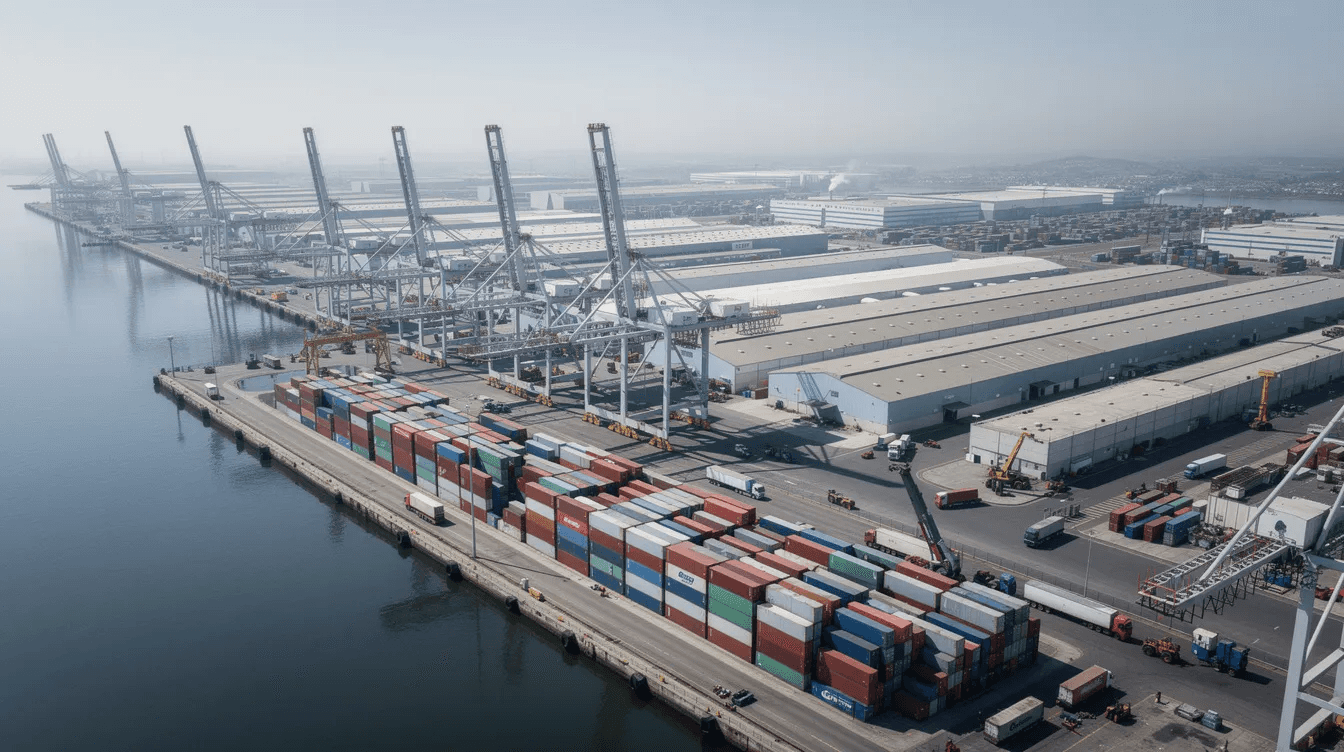
The main challenges are labor shortages and weak capital spending. Talent shortages in manufacturing require companies to invest in training and upskilling, especially as automation changes job demands, aligning with broader visions like MIT’s initiative for U.S. manufacturing transformation that couple technology with workforce development. Companies need to invest in partnerships with academia and educational institutions. It’s worth implementing initiatives that aim to bring more women into production roles.
Automation and Industry 4.0 technologies are changing skill demands in manufacturing, yet capex plans appear weak relative to historical norms, even as leaders grapple with top risks in manufacturing such as supply chain disruption, labor shortages, and cost volatility.
Richmond region's findings suggest that transformation requires both capital and people. Without stronger hiring and investment, key suppliers and ports could face bottlenecks when demand rises. Relying more on contractors increases safety and compliance risks, which require careful oversight. While sustainability efforts are underway, real progress requires both funding and skilled workers.
From Regional Growth Patterns to Third-Party Risk Strategy
U.S. manufacturing growth is real but uneven, showing broad demand in Philadelphia, strong activity in Kansas City, cost pressures in New York, softer conditions in Dallas, and labor and investment challenges in Richmond. The Federal Reserve Banks use this mosaic of survey data alongside inflation and labor statistics to shape monetary policy.

Every FOMC meeting carefully reviews these regional reports from various districts to make informed rate decisions that directly impact financing conditions for manufacturers and their suppliers.
A McKinsey review noted that firms with proactive supply-chain risk programs recover from disruptions faster, particularly when they pair process discipline with continuous industrial risk assurance that automates monitoring of safety and operational signals.
Risk and compliance teams should tailor supplier strategies by region—setting onboarding rules, insurance needs, and ESG checks based on local conditions. Firms with proactive supply-chain risk programs bounce back faster from disruptions, underscoring the need to track these trends monthly and adjust risk measures accordingly, and tools like an AI risk assistant for industrial compliance can help translate these regional signals into daily workflows.
Manufacturing drives the majority of the nation's private-sector research and development, and government reports show that its economic impact extends far beyond the factory floor. When growth varies across regions, companies that adjust their third-party risk strategies to focus on areas with the most sustainable demand gain a clear competitive edge.
Strengthen Third-Party Risk Management with Parakeet Risk in U.S. Manufacturing Growth Regions
Parakeet Risk’s industrial risk management platform streamlines supplier prequalification, verifies insurance certificates, and continuously monitors safety, financial, and ESG risks. Manufacturers growing in the Kansas City Fed region can quickly onboard welding contractors and logistics partners. Those working with suppliers in New York or Dallas can rely on Rosella, Parakeet Risk’s AI risk assistant, to spot cost pressures or compliance issues early—helping prevent production delays. In today’s competitive US manufacturing landscape, continuous risk monitoring is essential to boost productivity and secure strong, reliable partnerships.
Reassess your regional supplier exposure and contact Parakeet Risk to book a demo and align your third-party risk strategy with the U.S. manufacturing growth hotspots.