Noticias Industriales
22 abr 2026
The Strait of Hormuz Standoff: How the Extension of the U.S.-Iran Truce Affects Global Economy

Magdalena Rucińska
Content Specialist
While President Trump’s extension of the U.S.-Iran truce has temporarily suspended offensive strikes, a deepening leadership vacuum in Tehran and a paralyzed Strait of Hormuz have left the world navigating an open-ended stalemate with no clear exit strategy.
We are currently navigating a bizarre two-week truce between the United States and Iran. That two-week pause was scheduled to expire overnight from Tuesday to Wednesday. Instead, President Trump extended it. The catch? No one quite knows when this new deadline ends.
…
➡️ Stay updated on the geopolitical situation❗
In our latest blog post, we comment on the current state of the Strait of Hormuz, breaking down factors that cause supply chain and energy sector shock. 🌍
…
Instead of returning to active military engagement, President Trump chose to prolong the existing two-week truce with Iran shortly before it was due to expire.
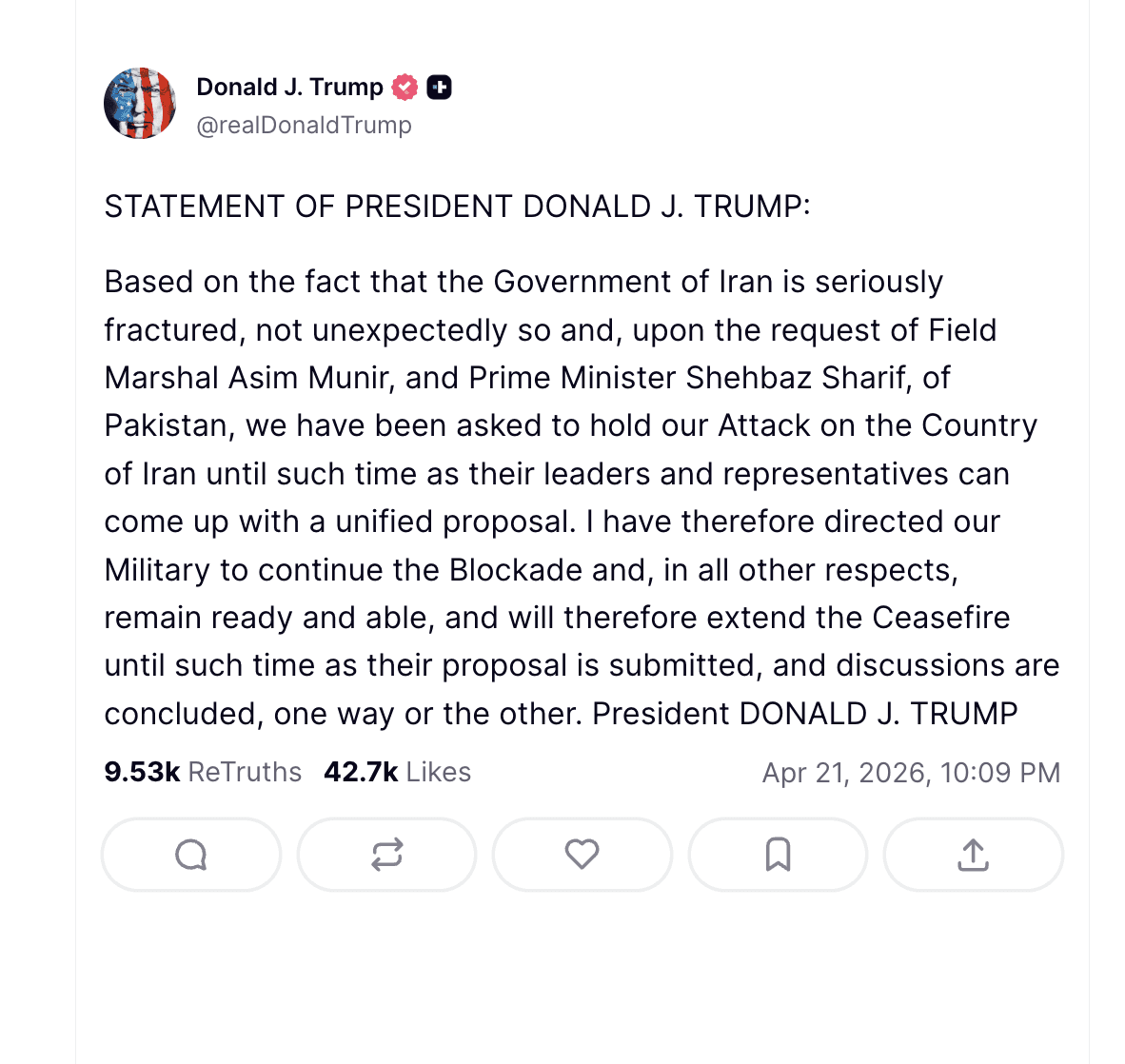
Source: https://truthsocial.com/@realDonaldTrump/posts/116444507618729432
This latest extension notably lacks a firm expiration date. In a Truth Social update announcing the move, Trump characterized the leadership in Tehran as "seriously fractured," signaling that while he is holding out for a diplomatic breakthrough, he remains cautious about restarting a politically sensitive war.
The current impasse in negotiations underscores the ongoing challenges the administration faces in securing a settlement that meets a wide-ranging and ambitious list of American demands.
🗞️ Read more about the US-Iran Conflict on our blog.
Vice President JD Vance’s recent marathon sessions in Pakistan that took place over April 11 and 12, 2026 ended in a stalemate. Vice President JD Vance led 21 hours of direct negotiations with an Iranian delegation, which ultimately ended without a formal agreement. His scheduled return to Pakistan was canceled because Tehran did not respond to the United States' negotiating positions.
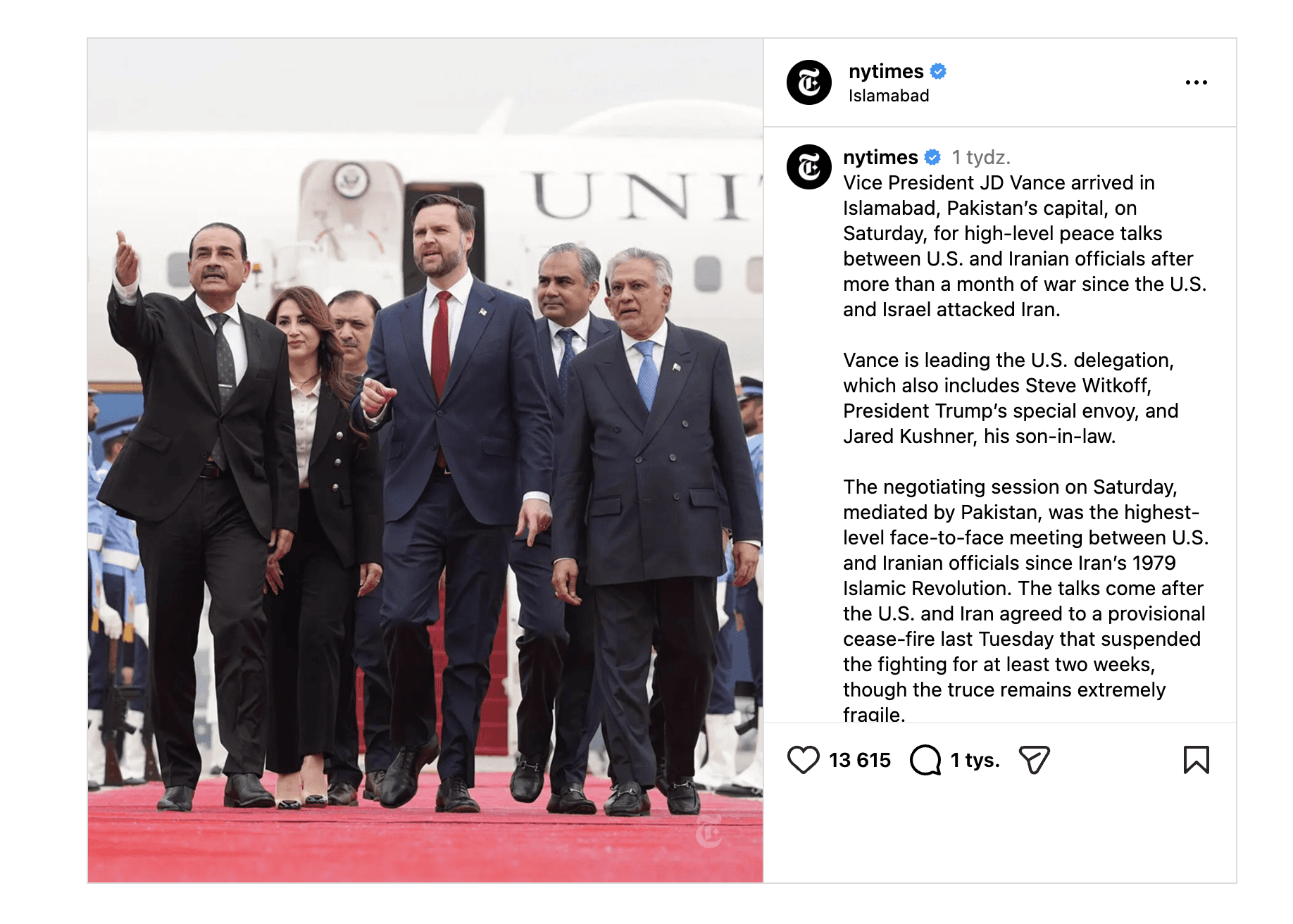
US Vice President JD Vance walks with Pakistani officials after arriving for talks with Iranian officials in Islamabad, Pakistan, Saturday, April 11, 2026. Source: nytimes
This diplomatic paralysis stems from a fundamental disconnect: Washington is looking for a "Great Deal" to end the war, but it is negotiating with a country currently in the throes of a silent succession crisis.
Why did President Trump prolong his ceasefire with Iran?
Trump insists he isn't looking for a "short" or "good" agreement; he demands a "great" deal. But perhaps the biggest hurdle for Washington is figuring out who is actually in charge in Tehran. Since the first day of the US-Israeli invasion, which resulted in the death of Supreme Leader Ali Khamenei, the Iranian power structure has been in chaos. His son, Mojtaba Khamenei, was officially chosen as the new Supreme Leader six weeks ago, but he has vanished from the public eye.
This has triggered a vicious internal power struggle. When the Iranian Foreign Minister recently claimed the Strait of Hormuz was open, the Islamic Revolutionary Guard Corps (IRGC) immediately contradicted him, declaring it closed. For Washington, negotiating with a fractured state is virtually impossible—a reality that likely factored into Trump's decision to extend the truce.
It seems that both sides want to find a way out of this situation. Iran wants the bombing to stop, and Donald Trump wants to stop bombing Iran, hoping to add another "ended war" to his political resume. However, a mutual desire for a face-saving exit has collided with conflicting interests and a high-stakes economic gamble.
The Double Blockade of the Strait of Hormuz
The most critical sticking point—and the one affecting the global economy—is the Strait of Hormuz. Despite fleeting rumors of its reopening, the strait remains firmly shut under a dual-layered blockade.
When one of the world's most vital maritime choke points for energy resources closes, the cascading effect on global inflation is inevitable. Reopening Hormuz is in everyone's interest, yet the standoff persists:
Iran's Leverage: Tehran initiated the Hormuz blockade to pressure Gulf states, hoping they would, in turn, force the US to halt its bombing campaign and withdraw. Iran's goal was to partially reopen the strait, charge exorbitant transit fees, and grant passage exclusively to "friendly" nations.
Washington's Retaliation: The US responded by blockading Iranian ports, paralyzing Iran's ability to execute its strategy.
LIVE: Vessel tracker shows traffic in the Strait of Hormuz. Source: Reuters
The double blockade—Iran closing the Strait to pressure the West, and the U.S. blockading Iranian ports to choke their revenue—has created a stalemate that neither side can break easily without losing face.
Ultimately, despite the conflicting agendas, one thing remains clear: Washington is exhausted by the conflict. The US administration urgently wants to clean up this colossal Middle Eastern mess, even if they haven't yet figured out how to sweep the floor. The reality makes it nearly impossible to forecast the actual longevity of this truce.
The strategic importance of the Strait of Hormuz in global oil trade and its geopolitical implications
The Strait of Hormuz is a geographic paradox: a narrow channel just 30 miles wide at its tightest point between the Omani Musandam Peninsula and the Iranian coast. Despite its physical constraints, it is exceptionally deep—reaching over 650 feet—making it the only viable corridor for the massive tankers that sustain the global energy trade. Yet, as the current blockade hardens, this deep-water artery has become a global bottleneck, and the resulting repercussions extend far beyond the price of a gallon of gasoline.
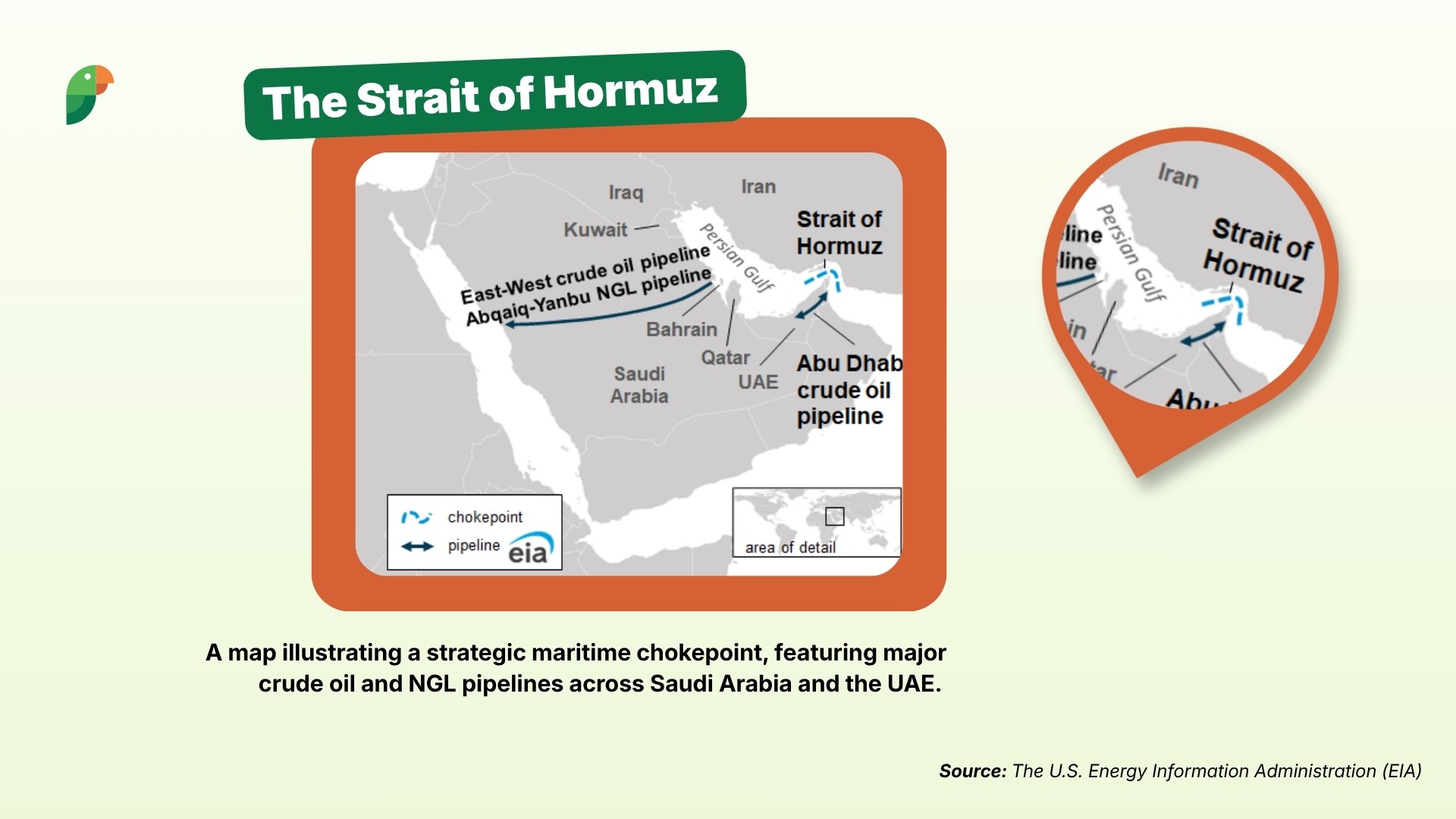
Map of the Strait of Hormuz and the Arabian Peninsula showing World Oil Transit Chokepoints. Source: eia.gov
The Strait of Hormuz serves as the only maritime route for several Gulf countries, including the UAE, Qatar, Bahrain, Kuwait, and Iraq, making it essential for their economic stability and energy exports.
The Strait handles almost 20 million barrels of oil per day, roughly 20% of global petroleum consumption, and represents nearly $600 billion in energy trade per year.
Over 80% of Persian Gulf crude oil exports are destined for Asian markets, primarily China, India, Japan, and South Korea.
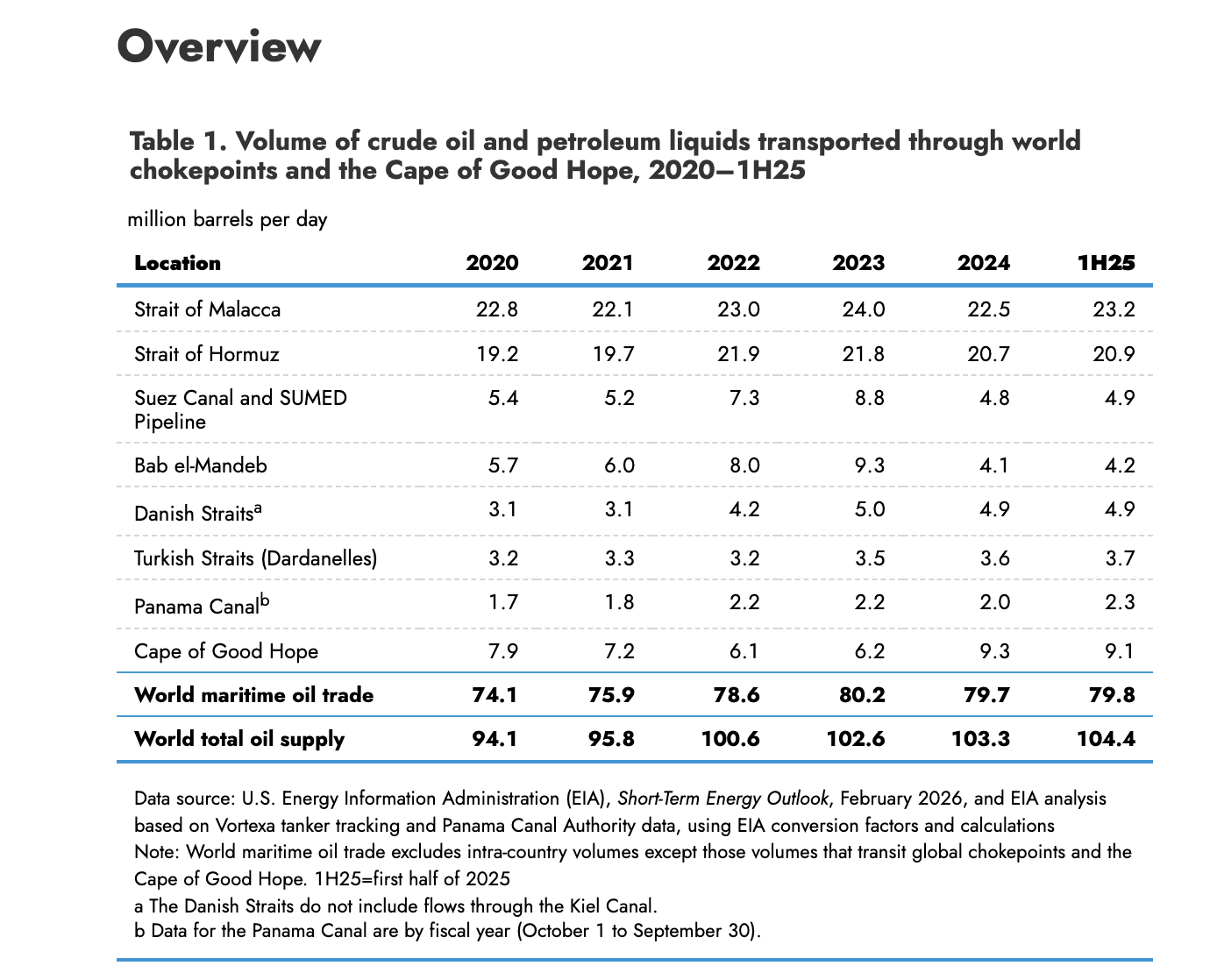
Source: eia.gov
Before the current conflict, the region supplied approximately 20% of global seaborne jet fuel and 10% of global diesel, which are essential for passenger flights, cargo shipments, and the trucks and generators that drive modern industry.
Why does the Strait of Hormuz shutdown matter for the global economy?
To understand the weight of this stalemate, it is necessary to look beyond crude oil. The Strait is a vital lifeline for imports into the Middle East, including food, medicine, and technology, while serving as the primary exit for commodities that underpin nearly every sector of the global economy. For example, about one-third of the world's fertilizer trade—including urea and ammonia—passes through these waters.
The disruption cuts directly into the foundations of global health and industrial manufacturing. The Gulf region accounts for:
50% of the world’s seaborne sulfur and 23% of its ammonia: The twin pillars of the fertilizer industry that feed millions.
33% of global helium production: An irreplaceable element for semiconductors and the cooling systems of MRI machines.
9% of the world’s aluminum: A fundamental material for global construction and automotive manufacturing.
The Global Repercussions of a Closed Strait of Hormuz
This total collapse of shipping through the Strait has triggered what economists call a "two-pronged global crisis."
The first problem is an immediate supply shock. As these essential goods fail to reach their destinations, producers are forced into a frantic scramble for alternative sources. This competition creates a brutal bidding war where wealthy nations can secure remaining supplies at a premium, while middle-tier economies are forced into rationing. For the most vulnerable populations, this isn't a policy debate—it is a reality of simply going without.
The second problem is the long-term logistical scarring. Even if a diplomatic breakthrough were to reopen the Strait tomorrow, the "cleaning up" process will take months, if not years. Much of the region's refining capacity has been physically damaged during the conflict, and the infrastructure required to process and export these commodities cannot be rebuilt overnight.
Moreover, with the ceasefire remaining highly fragile, shipping companies and maritime insurers are likely to remain cautious about returning to the waterway, fearing that the cycle of attacks could be reignited at any moment.
Don't miss a beat in the high-stakes negotiations between Washington and Iran. Visit our blog for real-time updates!
Sources:
https://www.marineinsight.com/10-strait-of-hormuz-facts-you-must-know/
https://unctad.org/publication/strait-hormuz-disruptions-implications-global-trade-and-development
https://edition.cnn.com/2026/04/21/politics/iran-trump-negotiations-peace-ceasefire
https://www.eia.gov/international/analysis/special-topics/World_Oil_Transit_Chokepoints