
In this article
- The Strategic Rise of Industrial Captives Beyond Commercial Limits
- Breaking Down the Three-Tier Risk Ownership Paradigm
- 1. The Great Market Split: Soft Property vs. Hard Casualty
- 2. The Industrial Risk Stack
- 3. Real-World Blueprint: How Caterpillar and D.R. Horton Innovate with Captives
- 4. A Dose of Candor: What the Evidence Proves (And What It Doesn't)
- 5. The Cyber Frontier & The 2026 Decision Agenda
- Why Commercial Cyber Insurance Failed Industrial Giants?
- The 2026 Executive Decision Agenda: Strategic Action Sequence for Executive Boards
- Take Control of Your Total Cost of Risk with Parakeet
- References
In 2026, industrial giants are increasingly moving away from traditional insurance models in favor of captive insurance entities to manage complex operational risks.
For years, corporate insurance followed a predictable pattern. When rates increased in challenging markets, companies turned to captive insurance as a backup. When rates dropped in easier markets, interest in captives faded, and businesses went back to standard renewals.
But in 2026, that script has been completely rewritten.
The Strategic Rise of Industrial Captives Beyond Commercial Limits
While property rates have declined, persistent volatility in casualty and cyber sectors has driven manufacturing and logistics firms to build their own formal, regulated insurance subsidiaries. These captive structures allow corporations to bypass retail markups, access wholesale reinsurance markets, and create customized coverage for emerging threats like supply chain disruptions.
Recent global data shows commercial insurance rates fell by an average of 6%, with property insurance dropping 12%. Traditionally, this would lessen interest in captives. Yet, Marsh-managed captives wrote $79.1 billion in premiums, Fortune 500 captive volume rose 9%, and chemical-sector captive premiums jumped 127%.
This change happened because leaders in manufacturing, construction, and logistics realized that today’s operational risks are too complex and unpredictable to depend only on commercial insurance.
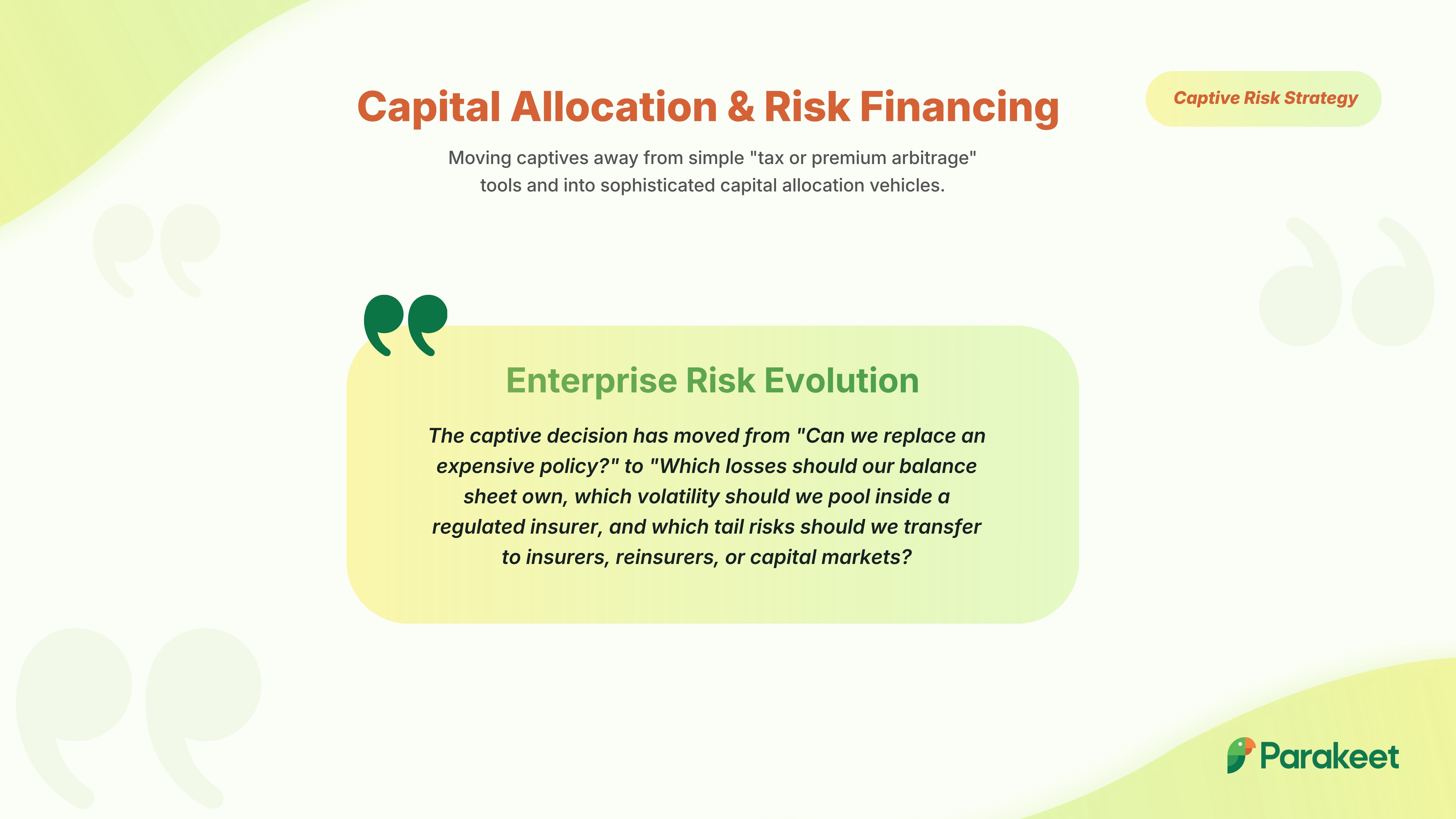
This overview covers why industrial firms are setting up permanent risk-capital structures, what the data shows, and how boards are handling the trade-offs.
Breaking Down the Three-Tier Risk Ownership Paradigm
Major industrial corporations embrace permanent risk-capital architecture through the use of captive insurance entities.
Companies break down their risk profiles into three layers based on how often losses happen, how severe they are, and how efficiently capital is used.
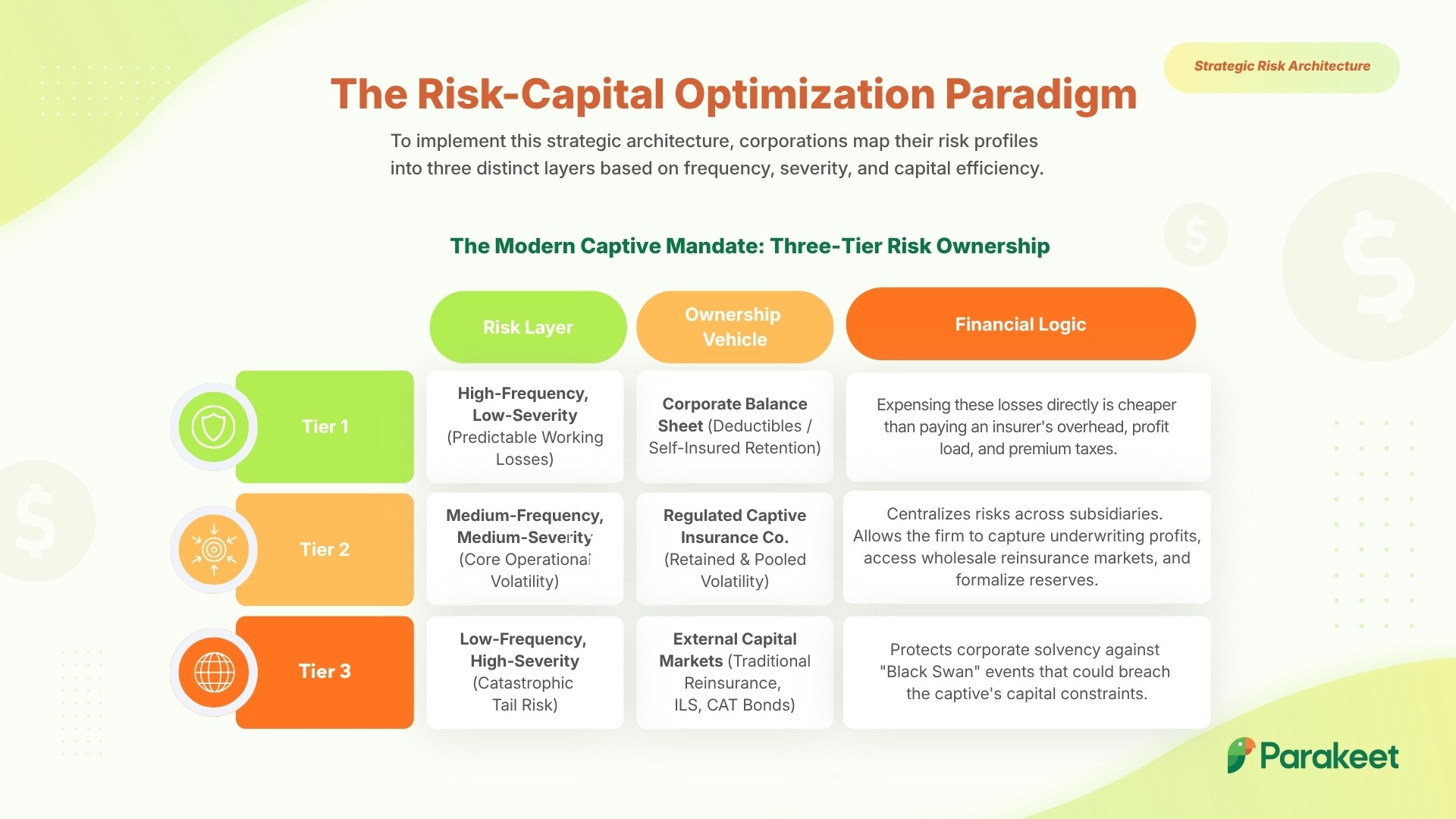
Why does this paradigm shift the captive mandate?
This transition is driven by a desire to avoid the "dollar trading" trap of high-frequency claims and to secure wholesale pricing by accessing reinsurance markets directly. By structuring their exposures into a multi-layered industrial risk stack, firms can proactively manage volatile or specialized threats like cyber disruption and supply chain bottlenecks that standard markets often ignore.
The captive architecture solves three major problems with traditional insurance buying:
- Eliminates the "Dollar Trading" Trap: Buying commercial insurance for frequent, predictable losses (Tier 1) means paying a 30% to 40% markup for insurer costs without getting extra value.
- Unlocks Wholesale Pricing: Commercial insurers often act as middlemen. With a regulated captive (Tier 2), companies can skip brokers and buy protection straight from global reinsurance markets at wholesale prices.
- Customizes Non-Traditional Coverages: Traditional markets often do not cover new or unpredictable risks like major cyber events, supply chain problems, or intellectual property disputes. A captive lets companies set aside funds for these special risks.
Ultimately, this strategic shift seeks to achieve zero blind spots by ensuring every operational risk is intentionally priced and managed, transforming insurance from a fluctuating expense into a disciplined financial asset.
1. The Great Market Split: Soft Property vs. Hard Casualty
Even though the overall market looks good for buyers, some risk categories tell a different story:
- Commercial Property: Experiencing abundant capacity with average renewal rates dropping 12% globally.
- U.S. Casualty: Still hardening, with average rates climbing 7%.
- Commercial Auto: Marked its 58th consecutive quarter of rate increases heading into 2026.
- Natural Catastrophes: Produced $107 billion in insured losses, with 92% driven by "secondary perils" like wildfires, severe convective storms, and localized flooding.
Because of ongoing high casualty costs, legal pressures, and climate risks, insurers are being more selective. Industrial firms now use captives to keep smaller losses and use commercial insurance only for the most serious risks.
2. The Industrial Risk Stack
A captive goes beyond being just a backup bank account with an insurance label. It is a formal, well-funded, regulated entity. Leading industrial organizations manage their risk across five clear layers that are included in the industrial risk stack:
- Operations & Controls: On-site prevention, risk engineering, vendor oversight, and proactive cyber defenses.
- Parent Retention: Every day, deductibles and expected operational friction are absorbed directly by the parent company.
- Captive Layer: A formal insurer, priced by actuaries, that covers program gaps, unpredictable risks, new threats, or special policies.
- Commercial Insurance & Reinsurance: Direct access to global reinsurers, backed by a record $760 billion in capital, for major disasters or overall stop-loss protection.
- Capital Markets: Insurance-Linked Securities (ILS) and catastrophe bonds handling extreme tail risk.
3. Real-World Blueprint: How Caterpillar and D.R. Horton Innovate with Captives
How do captives solve real-world balance sheet and supply-chain challenges? Case studies of leaders like Caterpillar and D.R. Horton demonstrate how these internal insurers stabilize costs and support subcontractors during market shortages.
Caterpillar: Building a Multi-Line Captive Asset
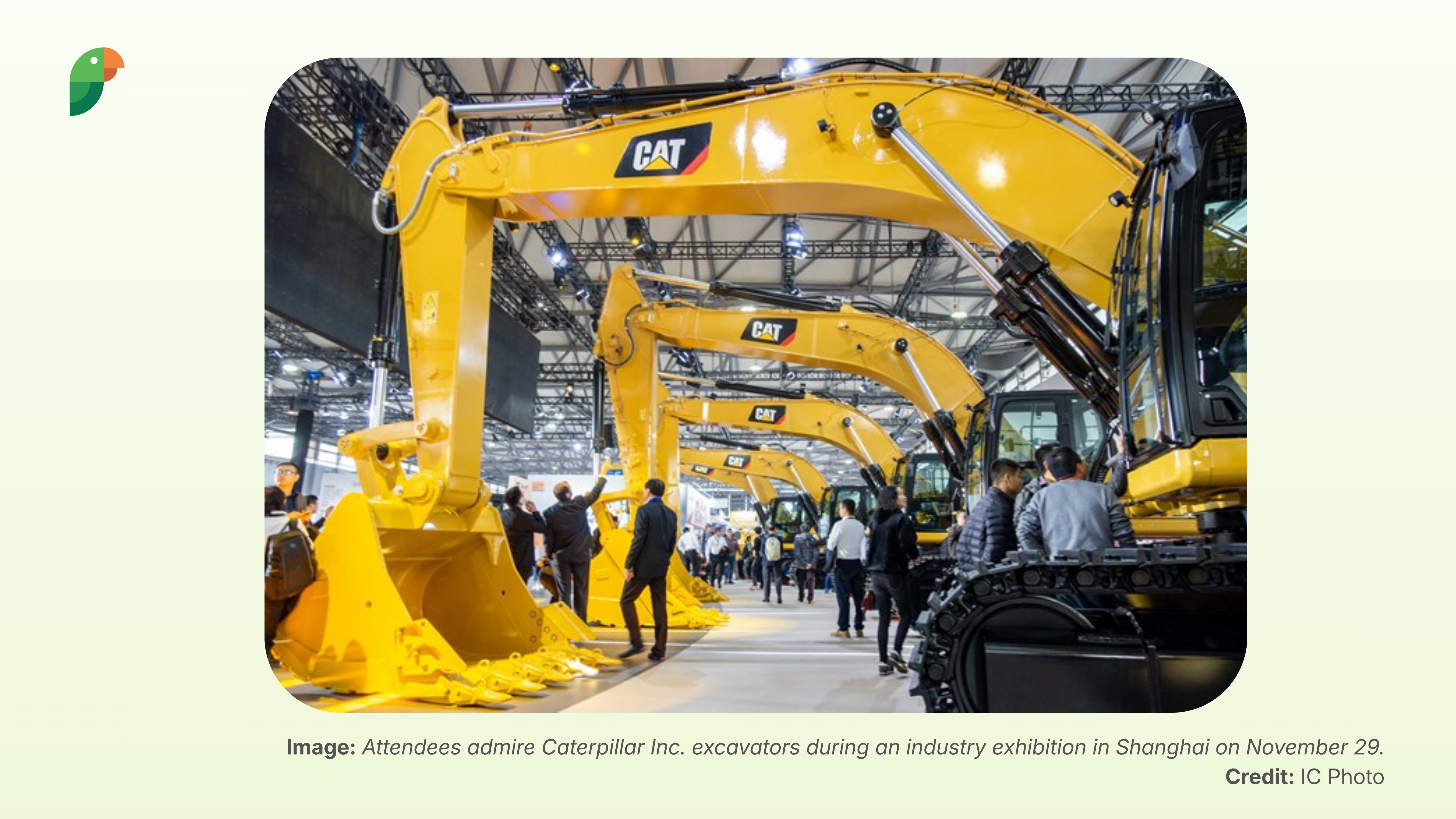
Caterpillar Inc. is the world’s leading manufacturer of construction and mining equipment, diesel and natural gas engines, industrial gas turbines, and diesel-electric locomotives, instantly recognized worldwide by its iconic "CAT" logo.
Caterpillar Insurance Co. Ltd., a Bermuda-regulated captive under Caterpillar Financial Services Corporation (Cat Financial), serves as Caterpillar Inc.’s main risk financing vehicle. It is designed to avoid commercial market markups, centralize global enterprise risk, and provide direct access to wholesale reinsurance markets.
Covered Risk Lines
- Core Property & Casualty: Global general liability, commercial property, commercial auto, and cargo exposure.
- Contractual Liabilities: Quota-share reinsurance structures covering vendor and customer contractual risks.
- Human Capital Risk: Reinsurance coverage across all international employee benefit plans.
📈 Strategic Value
By expanding beyond traditional property and casualty risks to include employee benefits and contractual liabilities, Caterpillar turned its captive from a cost-saving tool into a centralized, multi-line financial asset.
D.R. Horton: Securing Supply Chains via Subcontractor Captive Programs
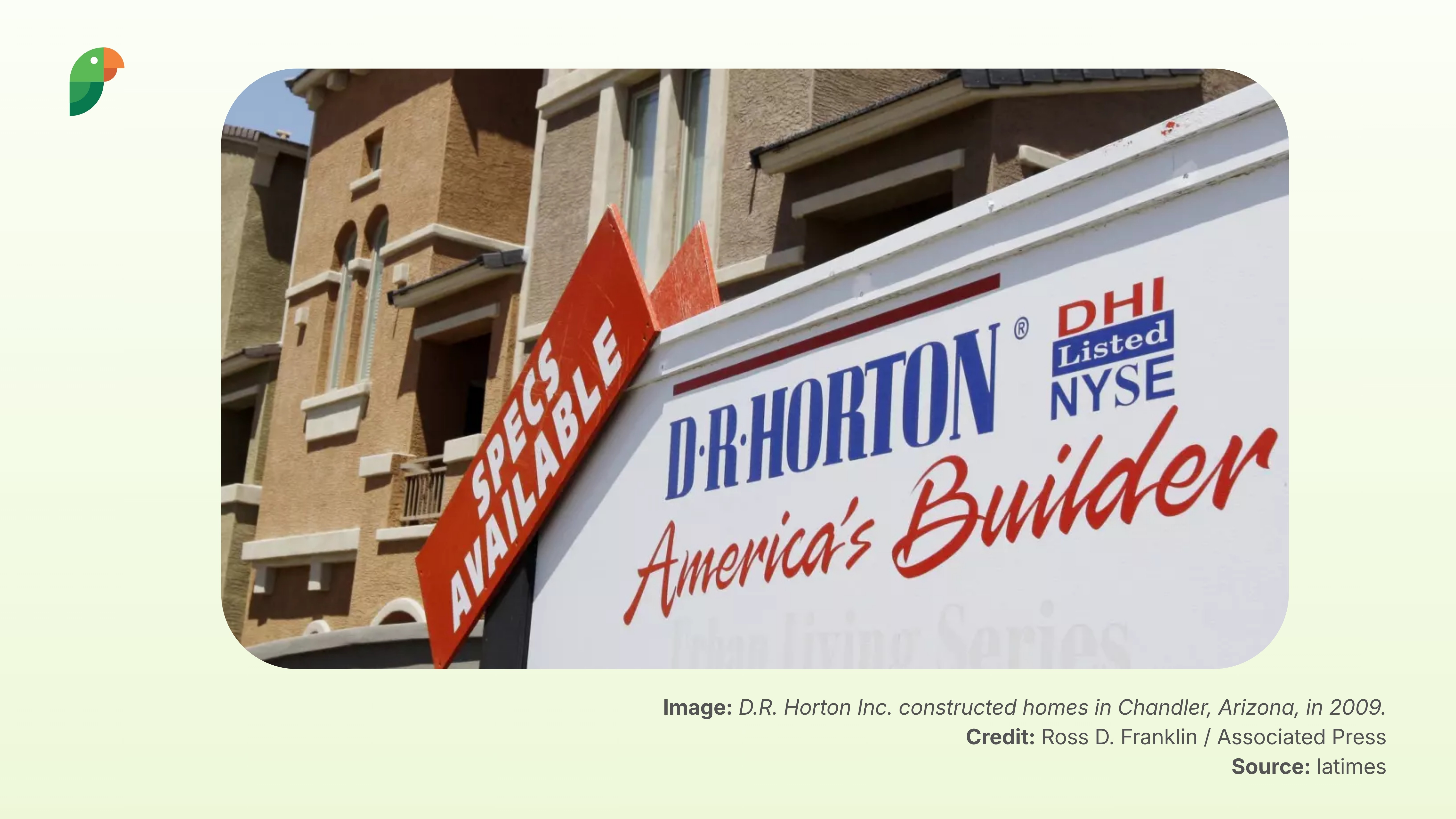
In construction and homebuilding, subcontractors often face insurance shortages or high liability costs. D.R. Horton addressed this by offering coverage to key subcontractors through third-party carriers or its captive. By setting safety standards and naming subcontractors as additional insureds, they avoided project delays and kept important projects moving.
Key Strategic Pillars
- Controlled Capacity: Provides reliable, affordable coverage to essential sub-trades that struggle in the commercial insurance market.
- Standardized Safety Governance: Mandates strict, enterprise-wide job-site safety standards as a prerequisite for coverage inclusion.
- Supply Chain Resilience: Prevents trade shortages, avoids costly build delays, and maintains project momentum across active developments.
4. A Dose of Candor: What the Evidence Proves (And What It Doesn't)
While industry numbers are strong—AM Best reports that rated U.S. captives had a five-year average combined ratio of 88.0 compared to 97.0 for commercial peers—executives should be careful not to be too optimistic.
The Reality Check: A 2026 academic study examining S&P Global 100 firms found no statistical evidence that captive ownership automatically improves annual corporate cash flow or firm valuation.
(Russell, Chen, and Chang, 2026)
A captive ties up regulatory capital, adds ongoing administrative work, and exposes the parent company to changes in underwriting and reserves.
For example, establishing an industrial captive in Utah requires a minimum statutory capital floor of $700,000, plus ongoing actuarial and audit opinions.
A captive does not automatically lower total loss costs. It simply makes an organization measure, price, and control its operational risks much more carefully.
5. The Cyber Frontier & The 2026 Decision Agenda
Captives are now managing a much wider range of risks. In 2014, only 1% of captive owners used them for cyber risk. By 2025/2026, that number grew to 24%, with another 4.1% planning to add cyber coverage in the next three years.
How are modern industrial giants shifting cyber risk into their captive platforms, and what is the full strategic impact?
Why Commercial Cyber Insurance Failed Industrial Giants?
The commercial insurance market has historically struggled to properly underwrite industrial cyber risks. Traditional cyber policies were designed primarily around data privacy and intellectual property loss (e.g., credit card breaches or leaked employee records).
However, industrial and logistics companies face a different set of threats: Operational Technology (OT) disruption, supply chain paralysis, and physical damage caused by cyber incidents.
Commercial insurers responded to these complex industrial exposures with:
- Skyrocketing Premiums: Double-digit price hikes year-over-year.
- Aggressive Exclusions: Broad war/state-sponsored attack exclusions and infrastructure failure carve-outs.
- Sub-Limits on Ransomware & Business Interruption: Strict caps that covered only a fraction of actual operational downtime costs.
By moving cyber risk into captive structures, enterprise leaders take back control over pricing, policy language, and risk retention.
Key Shift: Industrial leaders no longer use captives just to save on insurance overhead. They now use them as strategic capital vehicles to build custom coverage that the commercial market will not provide.
1. Bridging the IT / OT Coverage Gap
Commercial carriers often require generic cybersecurity metrics that work for office software but do not address SCADA systems, automated warehouses, or industrial IoT. A captive structure lets an industrial organization create bespoke policy language that covers business interruption from operational technology outages.
2. Hybrid Risk Structuring (Layered Retention)
Instead of insuring all cyber risk through commercial insurance, industrial giants use a layered approach:
- Primary Layer (Captive): The captive retains high-frequency, manageable cyber losses (e.g., minor vendor outages, limited ransomware remediation) where the company has high confidence in its internal defenses.
- Catastrophic Layer (Commercial Reinsurance): The enterprise purchases excess commercial coverage or reinsurance solely for low-frequency, catastrophic events (e.g., global supply chain shutdown).
3. Aligning Risk Management with Capital Efficiency
When a company pays commercial premiums, that capital leaves the enterprise forever. When paid into a captive:
- Premiums accumulate as internal reserves and yield investment returns.
- Unused underwriting profit stays within the parent corporate structure.
This creates direct financial feedback: Investments in stronger CISO controls can directly lower internal captive premiums.
The 2026 Executive Decision Agenda: Strategic Action Sequence for Executive Boards
For CFOs, Chief Risk Officers (CROs), and CISOs evaluating their captive roadmap, the strategic priorities center on 5 operational pillars:
- Map Claims & Exposure: Audit 5–10 years of loss history across business units, supply chains, and specific operating sites.
- Measure Total Cost of Risk (TCoR): Consider the full financial impact of programs, including retained losses, friction costs, and capital charges, not just premium savings.
- Establish Rigorous Governance: Ensure all policies use fair pricing, clear claims procedures, and strict investment rules to remain legally compliant.
- Link Premiums to Controls: Reward business units that implement verified safety, equipment maintenance, or cyber defenses with lower internal deductibles.
- Stress-Test Annually: Model severe losses across different lines and account for reserve inflation to make sure the parent company can handle tough financial years.
Captive insurance has evolved from a short-term fix to a core financial tool for today’s industrial companies. Even with high administrative costs and capital requirements, this shift marks a move toward more disciplined and intentional risk ownership. In the end, the rise of industrial captives shows a desire for full visibility and control over a company's financial health in every market cycle.
Take Control of Your Total Cost of Risk with Parakeet
As commercial insurance becomes more selective and supply chain risks increase, industrial leaders cannot afford blind spots on their balance sheets. Whether you are considering a captive, adjusting retentions, or building ongoing risk monitoring for your contractors and suppliers, Parakeet Risk offers the tools and insights to turn operational risk into strategic value.
💬 Ready to stress-test your risk capital strategy?
Connect with Parakeet Risk today →
References
- AM Best (2025). Captive Insurance and Alternative Risk Entities Continue to Emerge and Excel. Available at: https://news.ambest.com/pr/PressContent.aspx?altsrc=2&refnum=36305
- Aon (2025b). Methodology and Respondent Demographics. Available at: https://www.aon.com/en/insights/reports/global-risk-management-survey/methodology
- Aon (2025c). Turning Risk into Resilience in the Industrials and Manufacturing Industry. Available at: https://www.aon.com/en/insights/reports/global-risk-management-survey/industry-insights/top-risks-facing-industrials-and-manufacturing-organizations
- Aon (2026a). Captives and Cyber: From Tactical Response to Strategic Risk Optimization. Available at: https://www.aon.com/en/insights/articles/captives-and-cyber-from-tactical-response-to-strategic-risk-optimization
- Aon (2026b). Reinsurance Market Dynamics: January 2026. Available at: https://assets.aon.com/-/media/files/aon/reports/2026/rmd-jan-2026-report.pdf
- Aon Securities (2025). ILS Annual Report. Available at: https://assets.aon.com/-/media/files/aon/insights/2025/aon-securities-2025-annual-report.pdf
- Captive.com (2026). Marsh 2026 Benchmarking Report Highlights Continued Captive Growth. Available at: https://www.captive.com/news/marsh-2026-benchmarking-report-highlights-continued-captive-growth
- Caterpillar Inc. (2026). Form 10-K for year ended Dec. 31, 2025. Filed with the SEC on February 13, 2026. Available at: https://www.sec.gov/Archives/edgar/data/18230/000001823026000008/cat-20251231.htm
- D.R. Horton, Inc. (2025). Form 10-K for the fiscal year ended September 30, 2025. Filed with the SEC on November 19, 2025. Available at: https://www.sec.gov/Archives/edgar/data/882184/000088218425000081/dhi-20250930.htm
- Marsh (2026a). Global Insurance Market Index, Q2 2026. Available at: https://www.marsh.com/en/services/international-placement-services/insights/global-insurance-market-index.html
- Marsh (2026b). 2026 Captive Benchmarking Report. Available at: https://www.marsh.com/en/services/captive-insurance/insights/captive-benchmarking-report.html
- National Association of Insurance Commissioners (NAIC) (2025). Insurance-Linked Securities. Available at: https://content.naic.org/insurance-topics/insurance-linked-securities
- Russell, D., Chen, J.-L., & Chang, M.-S. (2026). Exploring the Connection Between Captive Insurance and Cash Flow. Asia-Pacific Journal of Risk and Insurance, 20(1), 55-86. Available at: https://doi.org/10.1515/apjri-2024-0061
- Swiss Re Institute (2026). Natural Catastrophes in 2025: The Persistent Rise of Wildfire and Storm Risk. sigma 1/2026. Available at: https://www.swissre.com/institute/research/sigma-research/sigma-2026-01-natcat-2025-wildfire-storm-risk/2025-hail-fire-flood.html
- The Council of Insurance Agents & Brokers (CIAB) (2026). Q4 2025 P&C Market Survey. Available at: https://www.ciab.com/resources/q4-2025-p-c-market-survey
- Utah Insurance Department (n.d.). Captives in Utah—Basics. Available at: https://insurance.utah.gov/captive/research/captives-in-utah-basics/

Written by
The Parakeet TeamIndustrial risk insights from the Parakeet Risk team.