Noticias Industriales
5 may 2026
Inside the High-Stakes War for the Strait of Hormuz: Navigating the Global Energy Shock

Magdalena Rucińska
Content Specialist
In a high-stakes geopolitical confrontation, the vital Strait of Hormuz remains largely blocked by Iranian forces, triggering a severe global energy crisis that has sent oil prices skyrocketing by over 50%.
Key Highlights
➡️ Following the suspicious explosion that crippled the South Korean-operated HMM Namu and a series of drone strikes on UAE-linked tankers, President Trump declared the status quo untenable.
➡️ In response, the U.S. launched the ambitious "Project Freedom"—a naval mission initially aimed at reopening the crucial chokepoint and crippling Tehran's maritime hubs through a counter-blockade.
➡️ However, less than 48 hours after its launch, President Donald Trump abruptly suspended the operation, putting a temporary pause on the escalating military tension to pursue a final agreement with Iran.
➡️ Tensions and blockades in the Strait of Hormuz trigger significant market uncertainty and price volatility across the global energy sector, particularly impacting oil prices.
Project Freedom: Trump’s High-Stakes Gamble to Reopen the Strait
Since the conflict began, Iranian authorities have largely blocked foreign shipping from accessing the Strait of Hormuz, heightening tensions in an already volatile region. As of May 2026, the U.S. has countered with Project Freedom—a naval blockade aimed not at the strait itself, but at Iran’s vital port infrastructure. This strategy focuses on crippling Tehran’s maritime hubs to counter its closure of the strait.
The objectives of "Project Freedom" include:
Reopening Global Shipping Routes — U.S. forces are actively working to restore transit through the Strait of Hormuz to ensure the flow of oil and other goods.
Economic Sanctions Against Iran: By exerting maximum economic pressure, the U.S. aims to diminish Iran’s oil revenue and indirectly hinder its military capabilities.
Shielding global energy supplies from further shocks.
Under the operational umbrella of Project Freedom, U.S. naval forces have begun providing direct tactical guidance and escorts to commercial shipping transiting the chokepoint. The mission reached a critical milestone this week with the successful, incident-free passage of the first two U.S.-flagged merchant vessels, as U.S. Central Command (CENTCOM) confirmed.
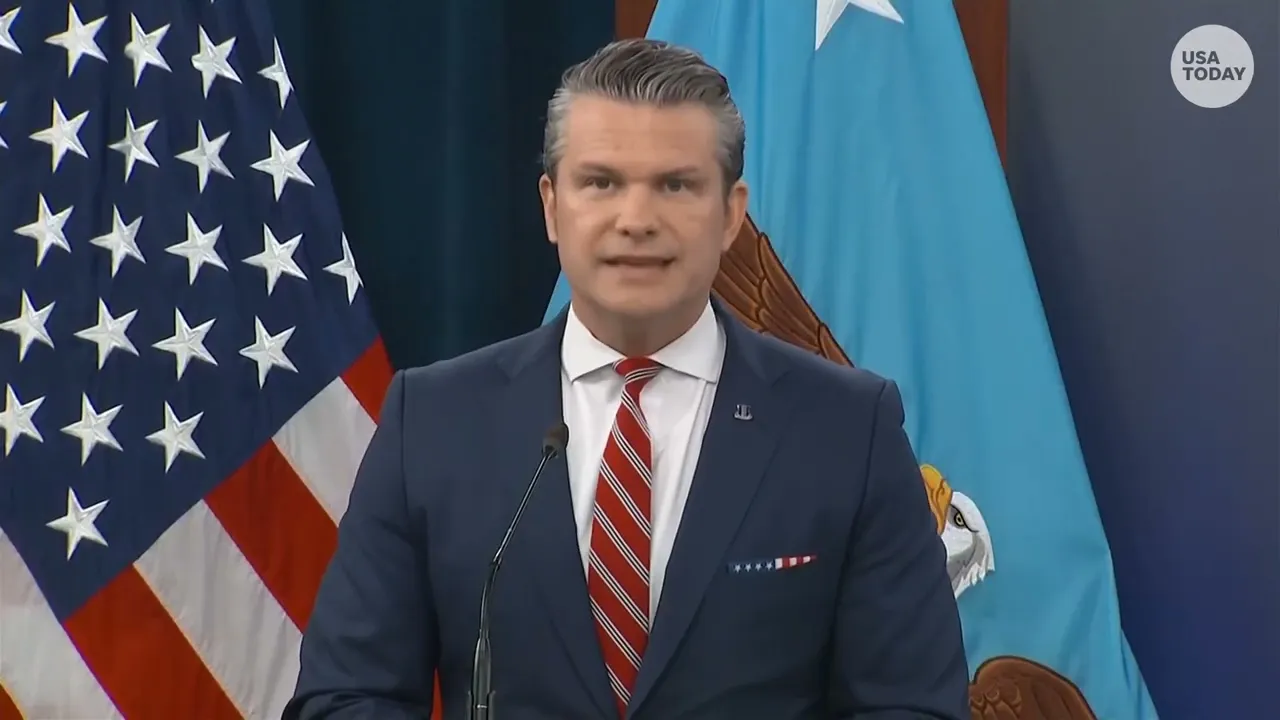
Defense Secretary Pete Hegseth underscored the administration's commitment to maritime stability, asserting that while the primary goal is to preserve peace and ensure safe passage, U.S. forces remain at a high state of combat readiness to respond to any Iranian interference.
An update: Trump pauses Project Freedom less than two days after launch
On Tuesday, hostilities between the United States and Iran sharply increased, putting the existing ceasefire at serious risk. The escalation followed military exchanges, with Iran launching attacks on the United Arab Emirates, while the U.S. retaliated by sinking six Iranian small boats.
On May 4, President Donald Trump announced the launch of ‘Project Freedom’—a U.S.-led mission tasked with the strategic reopening of the Strait of Hormuz to international shipping.
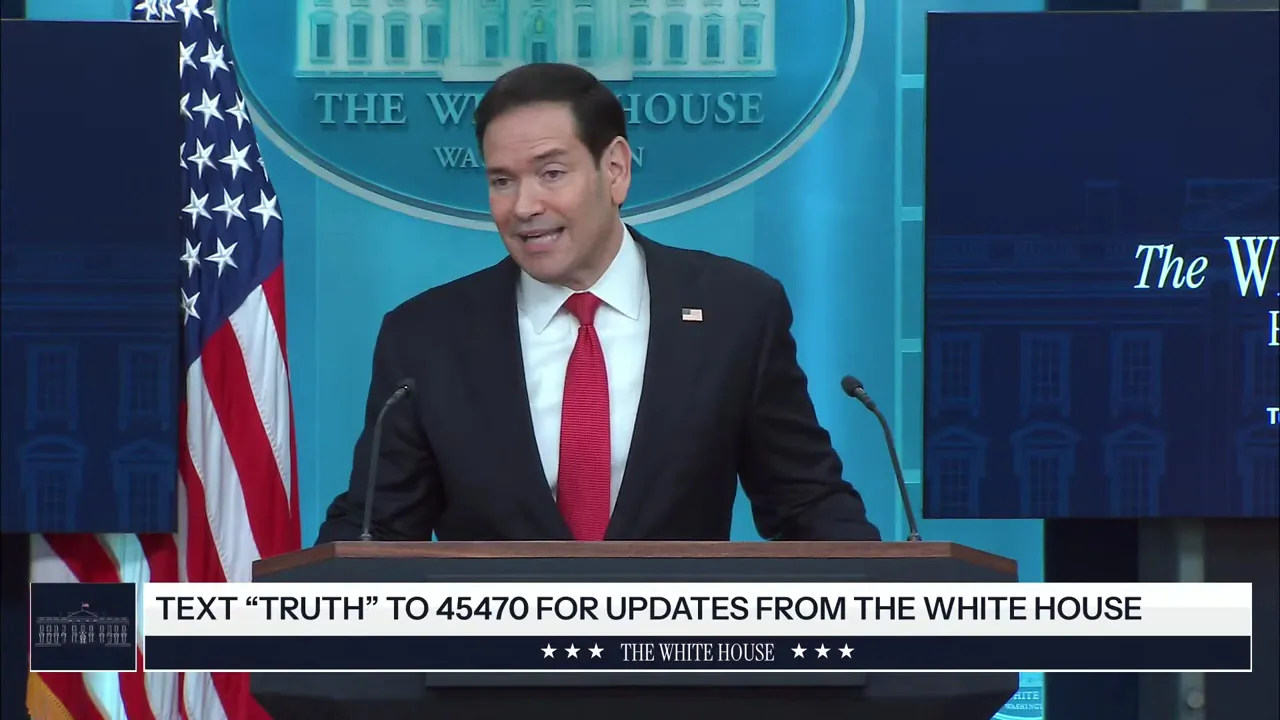
Secretary of State Marco Rubio declared the successful completion of "Operation Epic Fury," stating that U.S. objectives had been met and that America's focus would now shift to guaranteeing the passage of ships through the Strait of Hormuz.
However, this unexpected end of the war was short-lived, as Donald Trump had a new announcement just two hours after the Secretary's declaration. Project Freedom was temporarily suspended — less than 48 hours after it was officially launched. The reason? To secure a brief window to reach a final agreement with Iran.
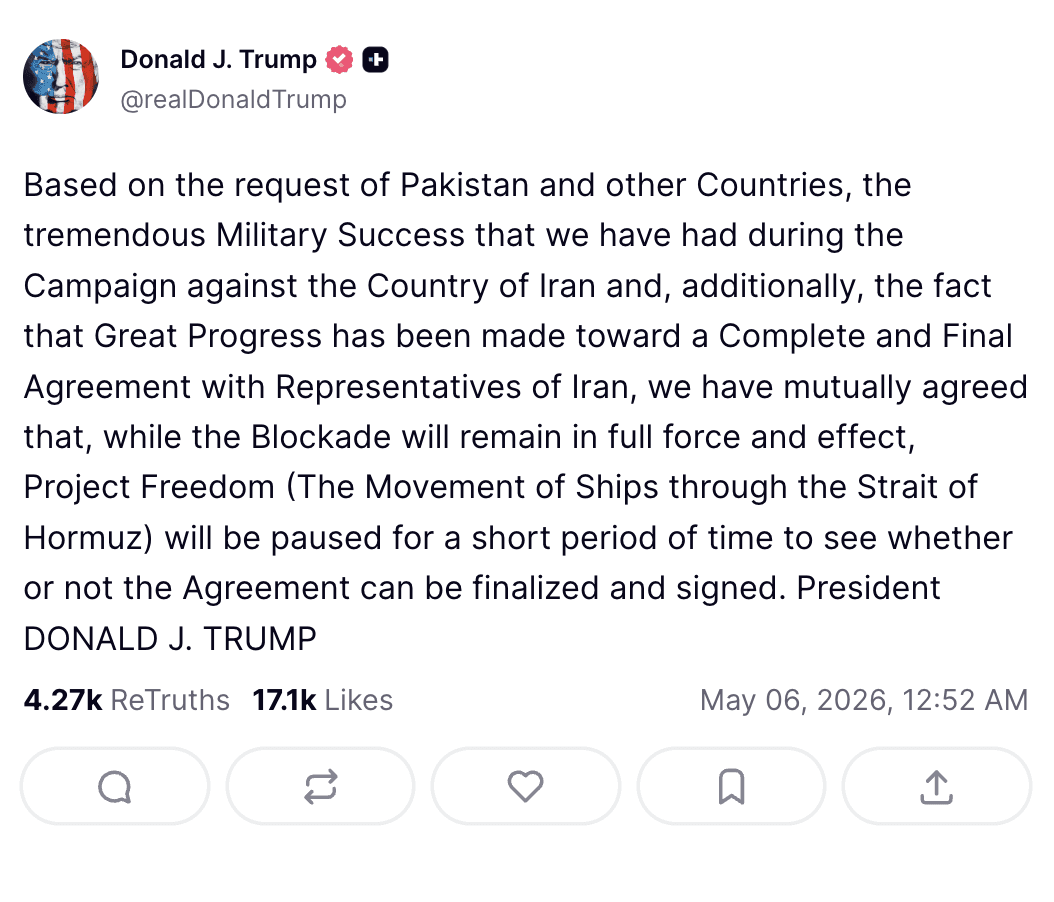
Project Freedom Paused. Source: Truthsocial.com/@realDonaldTrump
President Trump decided to temporarily pause Project Freedom, despite its early success, according to the claim on Truth Social. As he highlighted at the beginning of the post, the suspension was requested by Pakistan and other intermediaries to provide space for final diplomatic negotiations with Iran aimed at ending the wider conflict.
Global Oil Supply Crisis: Historic Energy Price Shock
As of early May 2026, intensified conflicts in the Strait of Hormuz—a vital energy chokepoint handling ~35% of global seaborne crude—have caused a severe supply shock.
Initially, the closure of the Strait of Hormuz triggered a global economic crisis, driving oil prices up by more than 50% from early-year levels. Brent crude trading cost reached even above $113 per barrel.
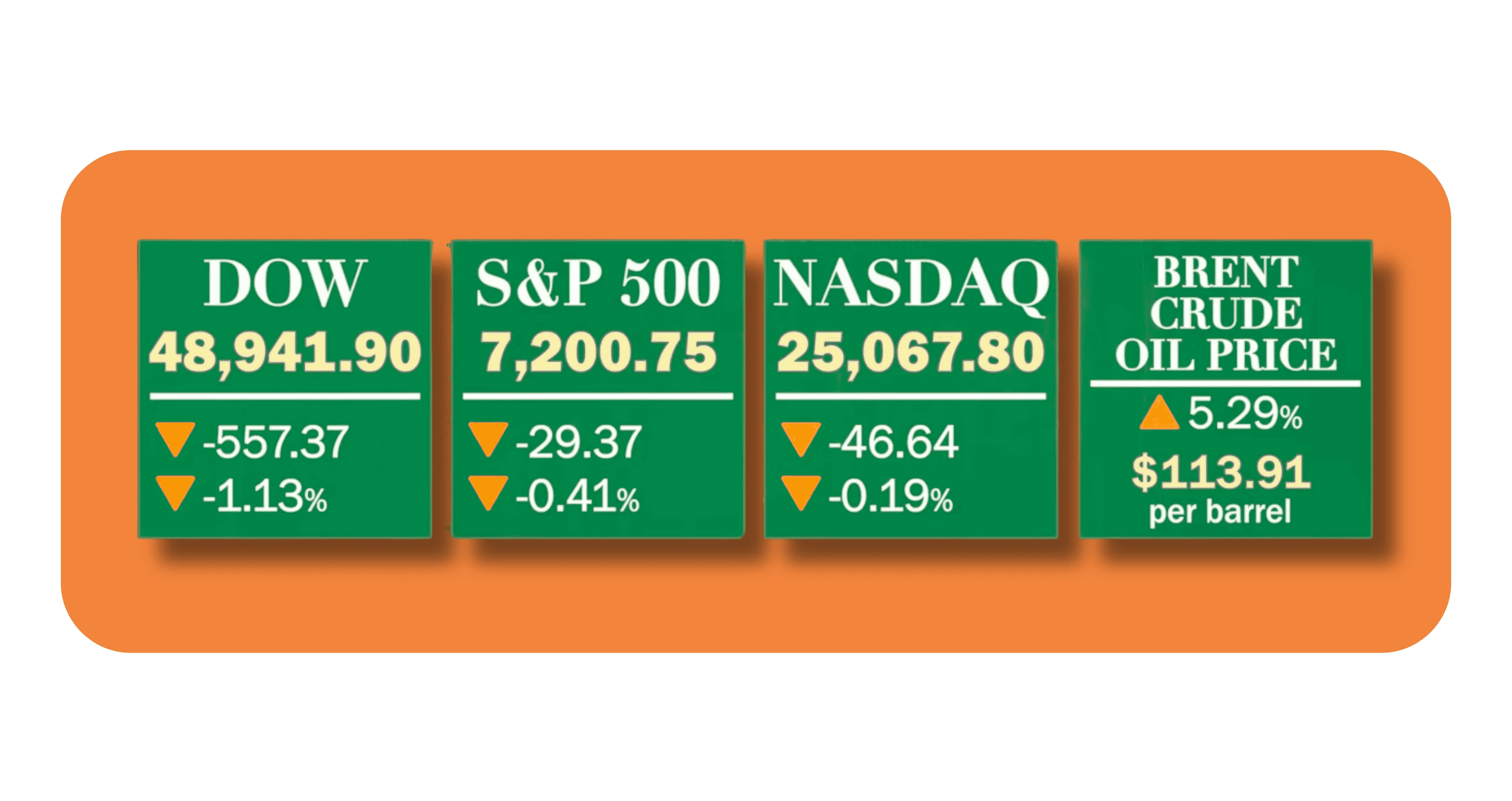
Market Data at the Height of the May 2026 Energy Shock. Source: CBS Evening News
Global markets are responding swiftly to this geopolitical whiplash. Oil prices reacted sharply to the suspension of Project Freedom and are now retreating below the $100 threshold (stabilizing in the $96–$98 range). This decline is a market reaction to the news of a possible peace deal between the U.S. and Iran.
The closure and attacks, involving US-Iran tensions, threaten a global energy crisis:
halting over 20% of global oil and liquefied natural gas (LNG) supplies;
creating massive oil shortages (removing roughly 14.5 million barrels per day (about 15% of global supply);
impacting transportation —since the conflict began, jet fuel prices in Asia have more than doubled. In addition, retail petrol prices in the U.S. and many other countries have reached record highs.
Additionally, the trade implications have cascaded into a full-scale logistical nightmare. The crisis has paralyzed the "maritime highway" far beyond the energy sector:
skyrocketing insurance costs;
causing severe supply chain disruptions for food and goods — due to increased energy costs impacting transportation and fertilizer prices;
triggering severe inflation.
The International Monetary Fund (IMF) has warned that a prolonged closure could lead to a significant downturn in global economic growth, raising the specter of a recession.
Follow real-time maritime traffic:
Vessel tracking illustrates maritime traffic in the Strait of Hormuz in real time. Source: Reuters
Are There Any Effective Strategies to Mitigate the Hormuz Shock?
In light of these risks, some countries are exploring alternative routes to bypass the Strait. For example, Saudi Arabia and the UAE have pipelines leading to the Red Sea, which can accommodate some oil shipments. However, if the Strait were to remain blocked, it would not only challenge Iran’s ability to export oil but would also lead to persistent shipping bottlenecks and high insurance premiums due to damaged infrastructure.
As the engines of Project Freedom pause for a high-stakes diplomatic window, the world watches the Strait of Hormuz even more closely. Is this the dawn of a final agreement, or the eye of the greatest energy storm in history?
Want to keep up to date with the current geopolitical risks? Visit our blog for more updates and insights.