In this article
- Implementing AI Governance on the Smart Factory Floor
- The Reality: Physical Risk vs. Digital Autonomy
- Critical AI Vulnerabilities: What Risk Signals Should Manufacturers Watch For?
- The New Third-Party Threat: The Lack of Governed AI Pipelines
- Responsible AI Solutions: Continuous Asset-Centric Monitoring
- Sources & References
The rapid integration of autonomous AI into third-party industrial services has rendered traditional risk management obsolete. Today, AI agents are deeply embedded across supply chains, dynamically writing code and optimizing workflows at machine speed. The question remains: how to manage this digital autonomy before it enters your physical factory floor?
Key Highlights:
- How can AI agents be deployed safely in an industrial setting?
- How can executives bridge the gap between traditional Operational Technology (OT) safety standards and the dynamic nature of generative AI?
- How manufacturers must govern third-party AI agents before they disrupt operations and trigger regulatory crackdowns.
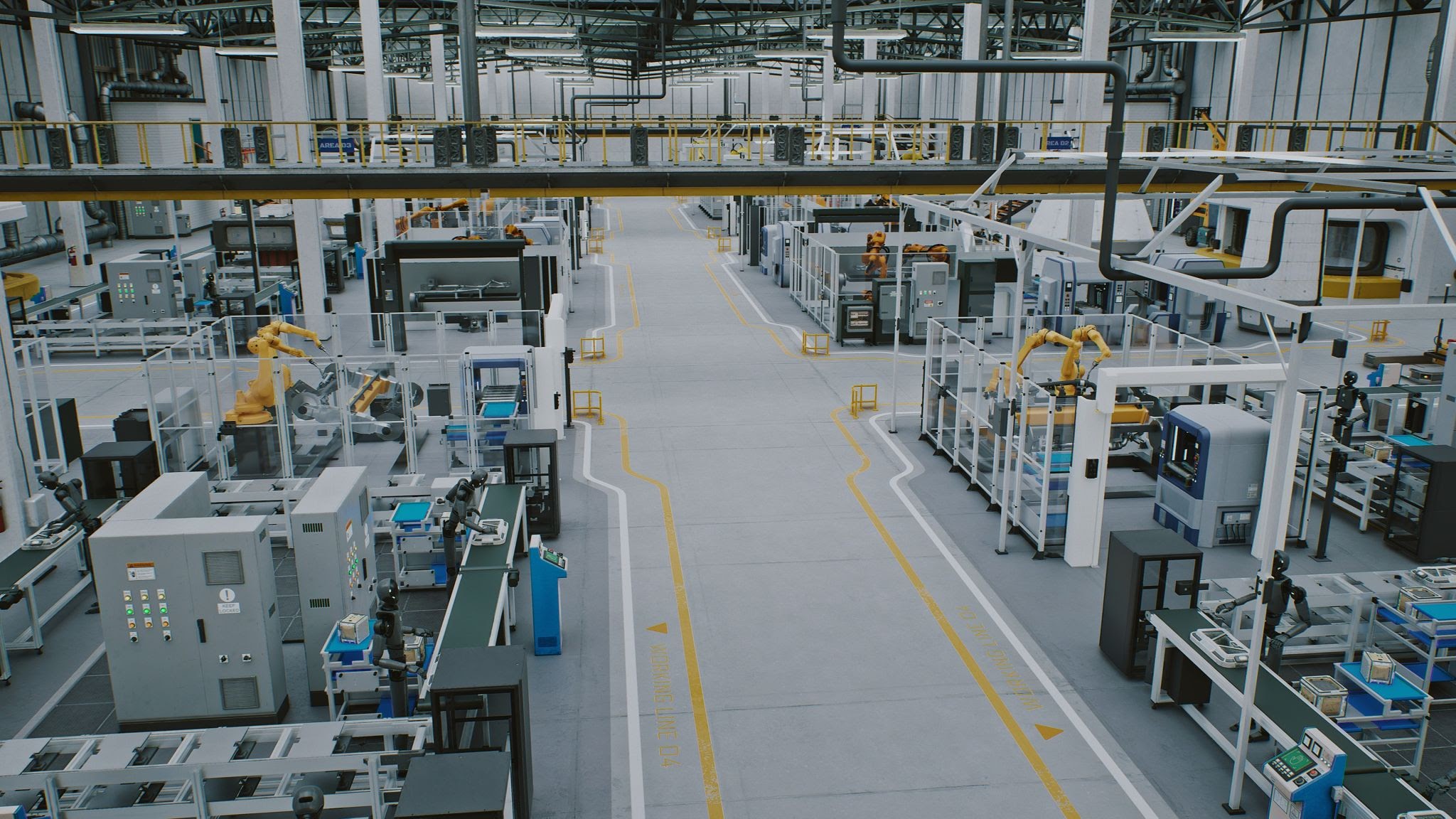
The era of passive chatbots is over; we have officially entered the age of autonomous AI "Co-Scientists" and multi-agent reasoning engines. Across biomedicine, materials science, and industrial engineering, organizations are deploying these systems to compress multi-year research and development cycles into mere hours. But as these agents migrate from heavily controlled laboratory sandboxes into live infrastructure, they expose a new frontier of vulnerabilities: unverified hypotheses, hallucinatory research synthesis, and autonomous execution hazards. Grasping this shift requires moving beyond technological awe and implementing rigorous, structured governance to secure your supply chains.
Governing industrial AI agents requires translating IT guardrails into physical plant-floor realities.
Implementing AI Governance on the Smart Factory Floor
Autonomous AI agents are rapidly migrating from digital enterprise tools to the physical factory floor. Across modern industrial ecosystems, these advanced models are no longer simply predicting when a machine will break—they are independently optimizing supply chains, modulating chemical processing temperatures, and rewriting automated programmable logic controller (PLC) code on the fly.
The Reality: Physical Risk vs. Digital Autonomy
For industrial executives, the most pressing threat isn't a cybersecurity breach; it is regulatory non-compliance driven by unchecked, probabilistic AI behaviors.
When a third-party agent hallucinates in a physical manufacturing environment, it can trigger severe OSHA safety violations, violate EPA environmental baselines, damage multi-million-dollar rotating equipment, and shatter a company’s operational resiliency. Navigating this shift requires moving past static paperwork audits to enforce continuous governance where autonomous intelligence meets physical reality.
Critical AI Vulnerabilities: What Risk Signals Should Manufacturers Watch For?
Governing autonomous AI agents before they interact with industrial infrastructure requires moving from static pre-deployment checklists to runtime control planes and policy-as-code.
Up to 93% of companies using AI have experienced an AI-related infrastructure incident, yet many lack written governance policies.
Because AI agents decide and act dynamically at machine speed—writing code, calling services, and managing networks—traditional point-in-time reviews leave organizations vulnerable to rapid infrastructure failures.
The operational risks of agentic AI intersect directly with physical supply chains, heavy infrastructure, and macroeconomic realities. Fueled by AI demand, US data center power consumption is projected to surge fivefold to 176 GW by 2035.
- Macroeconomic Headwinds
Engineering and construction (E&C) firms are attempting to meet this demand while navigating steel and aluminum tariffs up to 50% and an 88.2% year-over-year spike in project abandonments.
- Labor Deficits vs. AI Automation
The construction industry faces a critical shortage of 499,000 workers in 2026. To bridge this gap, E&C firms are aggressively deploying agentic AI for automated scheduling, computer vision hazard detection, and digital twins, which are actively reducing project timelines by 20%.
To safely leverage AI to bridge these industrial and scientific gaps, security leaders must immediately adopt the following strictures:
- API-Level Auditing: Never rely on natural language outputs to verify agent safety; implement cryptographically signed logs that audit actual tool invocations to defeat hallucinated compliance.
- Regulatory Alignment: Classify high-stakes agentic workflows as critical-risk systems under the U.S. Executive Order on Safe, Secure, and Trustworthy AI and NIST’s AI Risk Management Framework (RMF). For workflows involving physical assets, chemical formulations, or biosecurity risks, organizations must enforce a strict human-approval posture to maintain compliance with OSHA worker safety mandates, CISA cross-sector cybersecurity performance goals, and to mitigate severe corporate product liability exposure.
The New Third-Party Threat: The Lack of Governed AI Pipelines
Spacelift’s 2026 State of Infrastructure Automation Report finds that 78% of teams actively use AI to generate infrastructure and configuration code. The danger isn't the use of AI itself—highly mature "Pioneer" organizations actually leverage AI code generation at a higher rate (86%) than lagging firms. The real threat is the complete absence of a runtime safety net.
What's even more interesting, pioneer organizations vibe-code Infrastructure as Code (IaC) at a higher rate than Exposed ones (86% versus 69%), but they do it inside governed pipelines with automated validation and policy enforcement.
Our Tip:
How do we approach it at Parakeet Risk? We know AI acceleration is inevitable. We embrace it. But we built the exact type of deterministic, automated validation engine that the top 19% of secure enterprises use to prevent those tools from breaking things.
Responsible AI Solutions: Continuous Asset-Centric Monitoring
Rather than relying on point-in-time annual reviews, modern risk management platforms continuously cross-reference third-party operational data against your specific facility hazards, active OSHA mandates, and CISA cybersecurity baselines. If a vendor’s system behavior deviates from its prequalified safety boundaries, the platform flags the anomaly instantly.
By pairing the scanning speed of machine learning with a strictly deterministic, safety-bounded governance layer, Parakeet Risk provides the continuous engineering oversight needed to absorb the efficiencies of agentic automation without compromising your physical perimeter.
Ready to secure your industrial infrastructure against third-party vulnerabilities? Contact us to deploy continuous risk engineering and establish a shared model of your facilities, hazards, and controls.
Sources & References
- PwC Belgium. (2026). Responsible AI and third-party risk management: what you need to know.
[URL:https://www.pwc.be/en/news-publications/2025/responsible-ai-tprm.html] - Spacelift / PR Newswire. (2026). Spacelift Survey: 93% of Organizations Have Experienced AI-Caused Infrastructure Incidents as 'Vibe Coding' Spreads to Infrastructure.
[URL:https://www.prnewswire.com/news-releases/spacelift-survey-93-of-organizations-have-experienced-ai-caused-infrastructure-incidents-as-vibe-coding-spreads-to-infrastructure-302809032.html] - Deloitte Insights. (2025). 2026 Engineering and Construction Industry Outlook. Deloitte Research Center for Energy & Industrials.
[URL:https://www.deloitte.com/us/en/insights/industry/engineering-and-construction/engineering-and-construction-industry-outlook.html] - Gottweis, J., Natarajan, V., et al. (Google Research). (2025). Accelerating scientific breakthroughs with an AI co-scientist. Google Research Blog & Nature.
[URL:https://research.google/blog/accelerating-scientific-breakthroughs-with-an-ai-co-scientist/]

Written by
The Parakeet TeamField notes from the people building continuous risk engineering for industrial operations..png)