
In this article
- Contractor Safety Ratings: Key Metrics and Their Importance
- What specific onboarding metrics should you look for when vetting a third-party contractor's safety record?
- 1. Lagging Indicators (The "Report Card")
- 2. Leading Indicators (The Proactive Measures)
- 3. Financial & Operational Insurance Metrics
- Best Practices for Implementing Contractor Safety Metrics
- How Automated TPRM Platforms Process This Data?
Discover the essential contractor safety ratings used to evaluate third-party risk and protect your jobsite. From historical OSHA metrics to proactive management systems, learn how organizations leverage these insights to prequalify subcontractors, ensure regulatory compliance, and drive continuous safety improvements.
In the United States, several types of ratings and metrics exist, created by different organizations—from government agencies and industry groups to private rating platforms. These standardized metrics help companies assess how well vendors manage workplace safety, allowing them to streamline contractor vetting and ensure compliance with regulatory standards.
Key takeaways include:
- How contractor safety ratings reflect both past safety performance and current safety management practices
- The importance of combining lagging and leading safety metrics for a comprehensive evaluation
- The role of continuous monitoring and automated platforms in maintaining up-to-date safety scores
- How to use safety ratings to ensure compliance and select safer contractors for future projects
Learn how to navigate these standardized ratings to successfully vet external contractors and build a proactive safety culture within your organization.
Contractor Safety Ratings: Key Metrics and Their Importance
Contractor safety ratings are critical metrics industrial and construction companies use to evaluate the safety performance of third-party contractors. These ratings provide a standardized way to assess how well contractors manage workplace safety, implement safety practices, and adhere to regulatory standards. Understanding contractor safety ratings is essential for organizations aiming to create a safer work environment, reduce incident management costs, and ensure compliance with safety regulations.
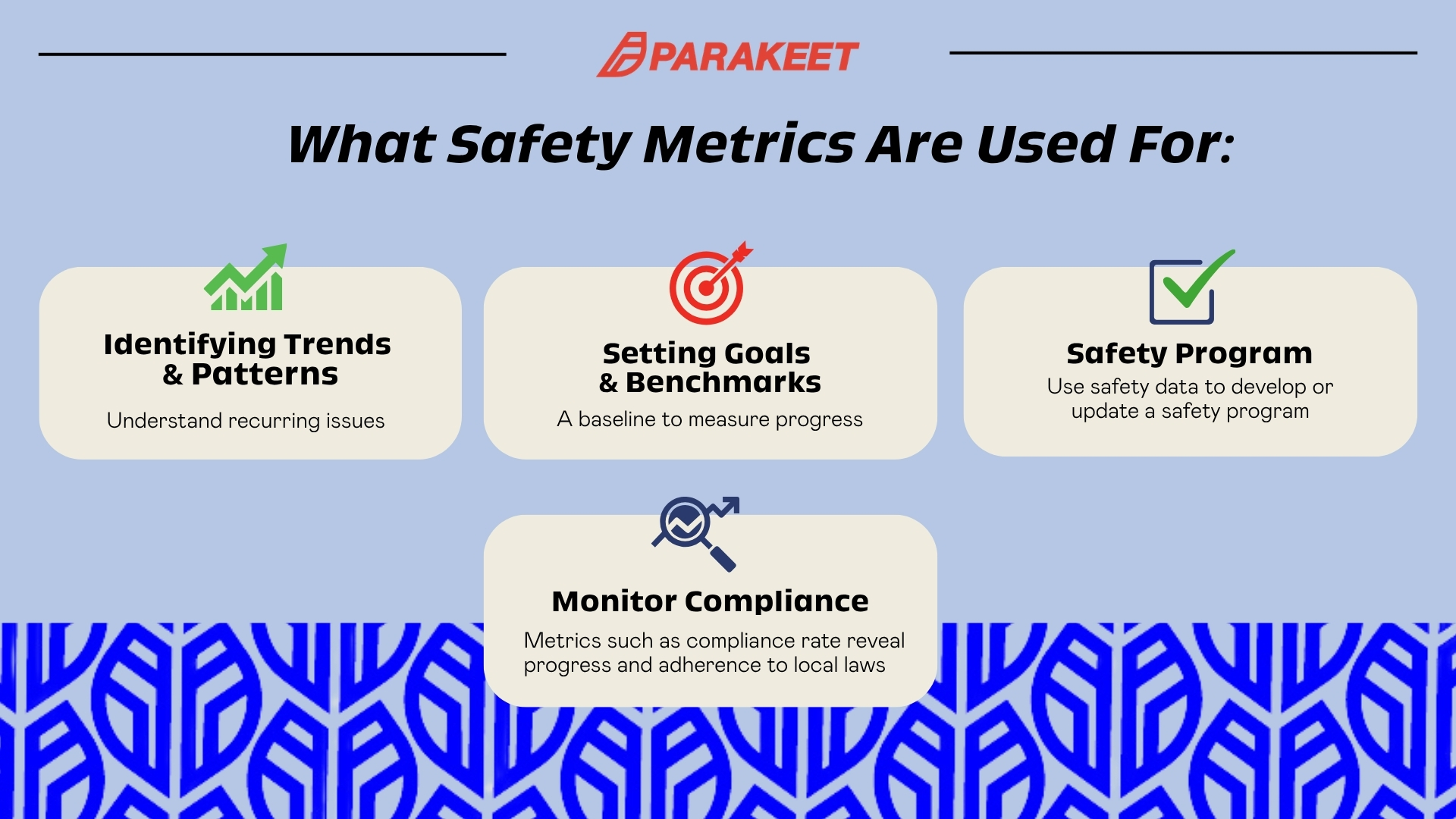
In this article, we explore the key components of contractor safety ratings, including both lagging and leading indicators, such as Total Recordable Incident Rate (TRIR), Days Away, Restricted, or Transferred (DART) Rate, Experience Modification Rate (EMR), and proactive safety culture measures. We also discuss how automated third-party risk management platforms leverage these metrics to streamline contractor vetting and onboarding.
Whether you are a compliance officer, risk manager, or operations leader in industries like construction, manufacturing, or energy, this guide will help you understand what contractor safety ratings signify, how they are calculated, and why they matter for your next project. By mastering these concepts, you can make informed decisions that support safety improvements, enhance productivity, and foster a proactive safety culture in your workplace.
What specific onboarding metrics should you look for when vetting a third-party contractor's safety record?
Automated third-party risk management platforms ingest these specific metrics to generate an overall safety score and determine if a contractor qualifies to step onto a jobsite, forming a core input into broader industrial third-party risk assessment programs.
1. Lagging Indicators (The "Report Card")
Lagging indicators tell you what has already gone wrong. These are heavily standardized metrics used across major industrial vetting platforms:
- Total Recordable Incident Rate (TRIR): Measures the number of OSHA-recordable injuries or illnesses per 100 full-time workers annually.
Formula:
TRIR=OSHA Recordable Incidents×200,000/ Total Hours Worked
The Benchmark:
The cross-industry average floats around 2.3 to 2.5. Many major hiring clients set strict baseline thresholds at ≤ 2.0 or 3.0. Anything higher triggers automatic rejection or an intensified review.
- Days Away, Restricted, or Transferred (DART) Rate: A subset of TRIR that filters for severity. It only counts incidents serious enough to cause a worker to miss time, require restricted duty, or transfer jobs.
The Benchmark: Hiring standard thresholds typically mandate a DART score ≤ 1.5.
- Experience Modification Rate (EMR): An actuarial metric provided by insurance companies based on a rolling three-year history of workers' compensation claims.
The Benchmark: A score of 1.0 is the baseline industry average. A score below 1.0 indicates a safer-than-average contractor (resulting in cheaper insurance premiums), while a score above 1.0 signals high risk. Many operators will completely bar any vendor with an EMR > 1.0
- OSHA Citation History: A historical search spanning 3 to 5 years looking for the volume and type of regulatory citations. Automated systems specifically flag Willful or Repeat violations, as these demonstrate a failure to correct known hazards under applicable OSHA workplace safety standards
2. Leading Indicators (The Proactive Measures)
Because lagging metrics can be skewed for small vendors (where a single accident can artificially skyrocket a small company's TRIR), automated platforms heavily score proactive safety controls:
- Written Safety Programs: Verification that the contractor maintains comprehensive, compliant written protocols tailored to the hazards they will encounter (e.g., Fall Protection Plan, Lockout/Tagout (LOTO), Confined Space Entry).
- Safety Training & Certification Ratios: Verification that personnel hold the necessary credentials relative to the specific work being performed (e.g., the ratio of on-site workers holding an OSHA 10 or OSHA 30 certification, or certified "Competent Persons" for specialized tasks like scaffolding or rigging).
- New-Hire Onboarding Programs: Vetting how the contractor introduces new employees to site safety. Platforms look for structured programs featuring hazard-specific training over lax "here are your gloves, get to work" orientations.
3. Financial & Operational Insurance Metrics
A contractor can have an immaculate safety record, but if they are under-insured, they introduce immense financial risk, especially on large projects where tools like Subcontractor Default Insurance are part of the overall risk-transfer strategy:
- Certificate of Insurance (COI) Validity: Automated matching of the contractor's active insurance against the minimum thresholds required by the project (e.g., General Liability, Workers’ Compensation, and Excess/Umbrella policies).
- Percentage of Providers Failing Initial Assessment: An internal tracking metric used by risk management teams to judge vendor supply-chain health. If a high percentage of incoming contractors fail the safety baseline, the company may need to source from higher-tier networks or adjust its vendor support strategies.
Best Practices for Implementing Contractor Safety Metrics
Meticulously evaluating safety metrics is crucial for organizations seeking to safeguard their workforce, optimize operations, and streamline contractor prequalification and vetting. By consistently monitoring Key Performance Indicators (KPIs), companies can effectively identify hazards, track improvements, and ensure compliance with regulatory standards.
- Balance Leading and Lagging Indicators: Identify the most relevant and meaningful metrics—combining historical incident data (like TRIR or EMR) with proactive measures (like training certification ratios)—to gain actionable insights that prevent future incidents.
- Automate Data Collection: Establish clear data collection methods and leverage automated risk management platforms to ingest data directly from insurance feeds and regulatory databases, ensuring real-time accuracy and consistency.
- Foster Cross-Level Communication: Communicate metrics clearly at all levels of the organization. Secure management buy-in to align safety metrics with overarching business goals, and prioritize employee engagement so that workers promptly report hazards and near misses.
- Review and Adapt Periodically: Continuously review the effectiveness of your chosen metrics. Adjust safety baselines and goals based on changing jobsite conditions, new OSHA regulations, or emerging operational risks to stay aligned with broader safety compliance strategies.
- Integrate Safety into Business Strategy: Incorporate safety metrics into core operational decision-making, resource allocation, and future project planning rather than treating safety as an isolated compliance checklist, embedding them within enterprise-wide safety compliance and culture initiatives.
How Automated TPRM Platforms Process This Data?
When managing hundreds of vendors, manually tracking these formulas in spreadsheets inevitably leads to missing a lapsed policy or an elevated EMR. Platforms like Parakeet Risk ingest these variable fields directly from insurance feeds and regulatory databases. They aggregate them into a single, dynamic scorecard, continuously computing the risk profile so compliance teams can monitor real-time contractor liability.
For more insights on proactive safety culture and operational risk management, explore related topics on the Parakeet Risk Blog. Ready to enhance your contractor safety vetting? Book a demo.

Written by
The Parakeet TeamField notes from the people building continuous risk engineering for industrial operations..png)