In this article
- Key Takeaways:
- Mitigating Fatal Risks in Construction Through Modern Technology
- How Do Wearable Devices Catch On-Site Hazards in Real Time?
- Converting Raw Human and Environmental Data into Predictive Risk Intelligence
- Wearables and Smart Risk-Tracking Devices: The New Frontier of Construction Safety
- Connected Wearables and Smart PPE
- Spatial IoT and Environmental Sensors
- Predictive AI Analytics and Automated Risk Monitoring
- Integrating Wearable Tech with Contractor Oversight
- Building a Proactive Risk Culture (And the ROI to Prove It)
- Navigating Regional Safety Regulations
- Let's Turn Industrial Risk From Historical Reporting into Predictive Intelligence
- References
- Frequently asked questions
A standard hard hat only works after an incident occurs; smart PPE is engineered to eliminate the risk of injury. By fusing real-time biometric tracking, proximity detection, and automated fall alerts into daily gear, modern risk monitoring technology is transforming ordinary jobsite wear into an intelligent frontline defense against workplace hazards.
Key Takeaways:
- Wearables like smart helmets, connected vests, and biometric sensors transform passive gear into real-time lifelines against falls, heat stress, and site hazards.
- Computer vision and predictive analytics identify restricted zone breaches and unsafe conditions before incidents happen.
- Smart wearables connected with monitoring tech tame the friction of cross-state regulatory fragmentation, turning compliance chaos into defensible proof.
- Integrating wearable metrics into third-party risk intelligence allows teams to prequalify, benchmark, and continuously monitor multi-tiered subcontractor chains.
This article walks through the core modern technologies transforming construction job sites and how risk leaders can integrate them into contractor, subcontractor, and supplier oversight.
Mitigating Fatal Risks in Construction Through Modern Technology
According to the U.S. Bureau of Labor Statistics (BLS), construction was the deadliest single private industry sector in the United States in 2023, accounting for 1,075 workplace fatalities.¹
On a global scale, studies confirm that construction workers face a 3 to 6 times higher risk of suffering a fatal accident on the job compared to workers in other fields.² This disproportionate risk is driven by inherent site hazards—working at heights, operating heavy machinery, and handling toxic materials like asbestos and hazardous chemicals.
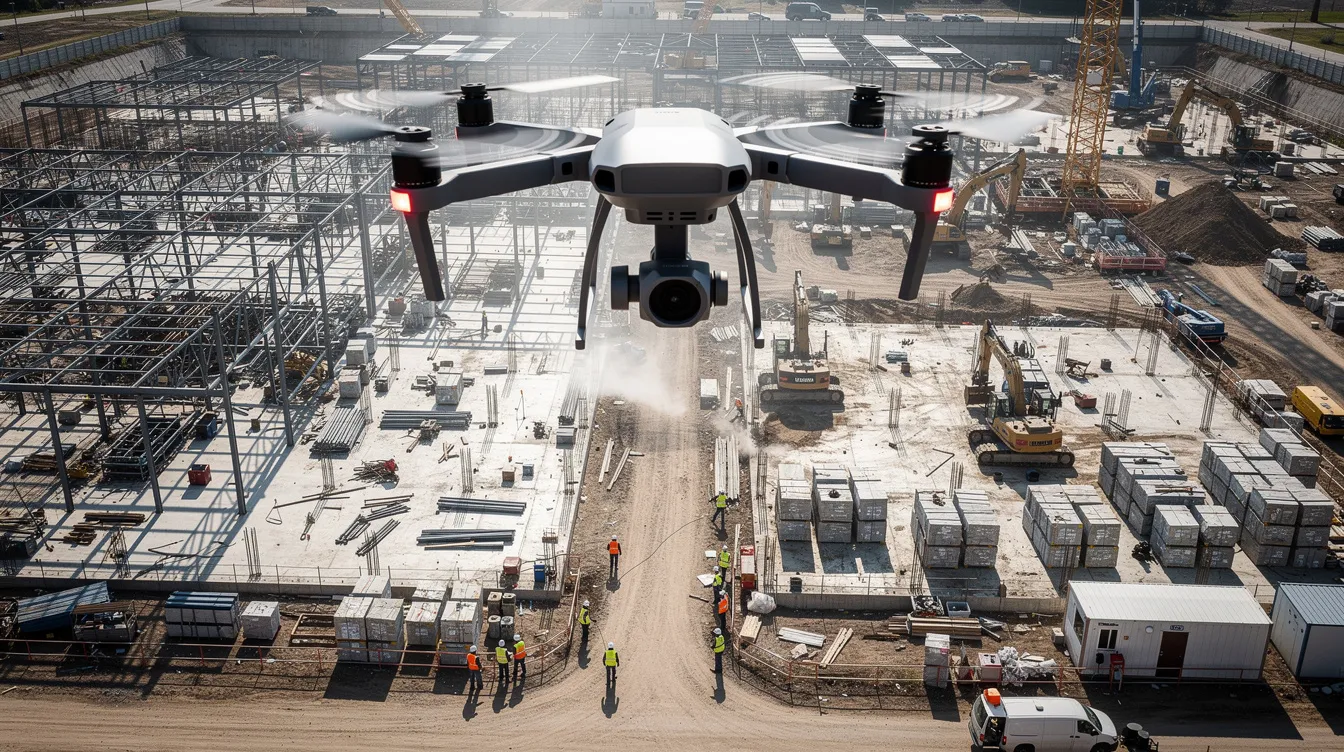
Modern job site pressures, including tight schedules, multi-layered subcontractor chains, and climate-driven heat exhaustion, only amplify these daily risks. To combat this grim reality, the industry is undergoing a critical shift. Since roughly 2020, emerging technologies like wearable devices, environmental sensors, drones, and AI have begun transforming industrial risk management.
In construction, long defined by physical hazards, risk mitigation cannot be left to chance. Building a genuine safety culture requires intelligent tools that continuously monitor operational risks and safeguard human lives.
How Do Wearable Devices Catch On-Site Hazards in Real Time?
Intelligent safety tools equipped with micro-sensors continuously monitor construction workers' vital signs, core body temperature, physical exertion, and environmental conditions.
Micro-sensors in wearable devices track biometrics, motion, and precise location to slash emergency response times.
By matching personal physiological data against established occupational health thresholds, smart wearables flag early indicators of distress—such as rising heart rates, dehydration, or heat exhaustion—and issue immediate alerts to workers and safety managers before a situation becomes a medical emergency.
Furthermore, by linking biometric monitoring with location data and kinematic motion sensors, smart PPE can instantly isolate sudden impacts, trips, and falls from heights—the leading drivers of construction site fatalities.
Converting Raw Human and Environmental Data into Predictive Risk Intelligence
Wearable devices shift site operations from reactive guesswork to proactive probability modeling. Rather than relying on lagging indicators or manual surveys, these systems stream real-time biometric inputs alongside spatial environmental variables directly into a centralized risk framework.
Biometric telemetry and equipment telematics transform industrial risk management into predictive, continuous risk enginnering.
Streaming real-time biometric inputs alongside spatial and environmental variables transforms raw field data into continuous, carrier-grade risk telemetry.
🛠️ Our Tip:
Parakeet Risk unifies disconnected job-site signals into a single, centralized risk framework across the entire subcontractor chain.
Translating physical site hazards into structured, immediate data points helps build an active risk architecture.
Actionable data streams cut emergency response windows and isolate critical anomalies long before they trigger a fatal incident.
For industrial risk managers, continuous telemetry oversight protects on-site workers. It also mitigates the catastrophic tail risks and operational drift that drive up workers' compensation claims and insurance premiums.
Wearables and Smart Risk-Tracking Devices: The New Frontier of Construction Safety
Today’s industrial safety ecosystem spans three core technology pillars, each engineered to intercept specific physical, environmental, and behavioral hazards before they escalate.
Connected Wearables and Smart PPE
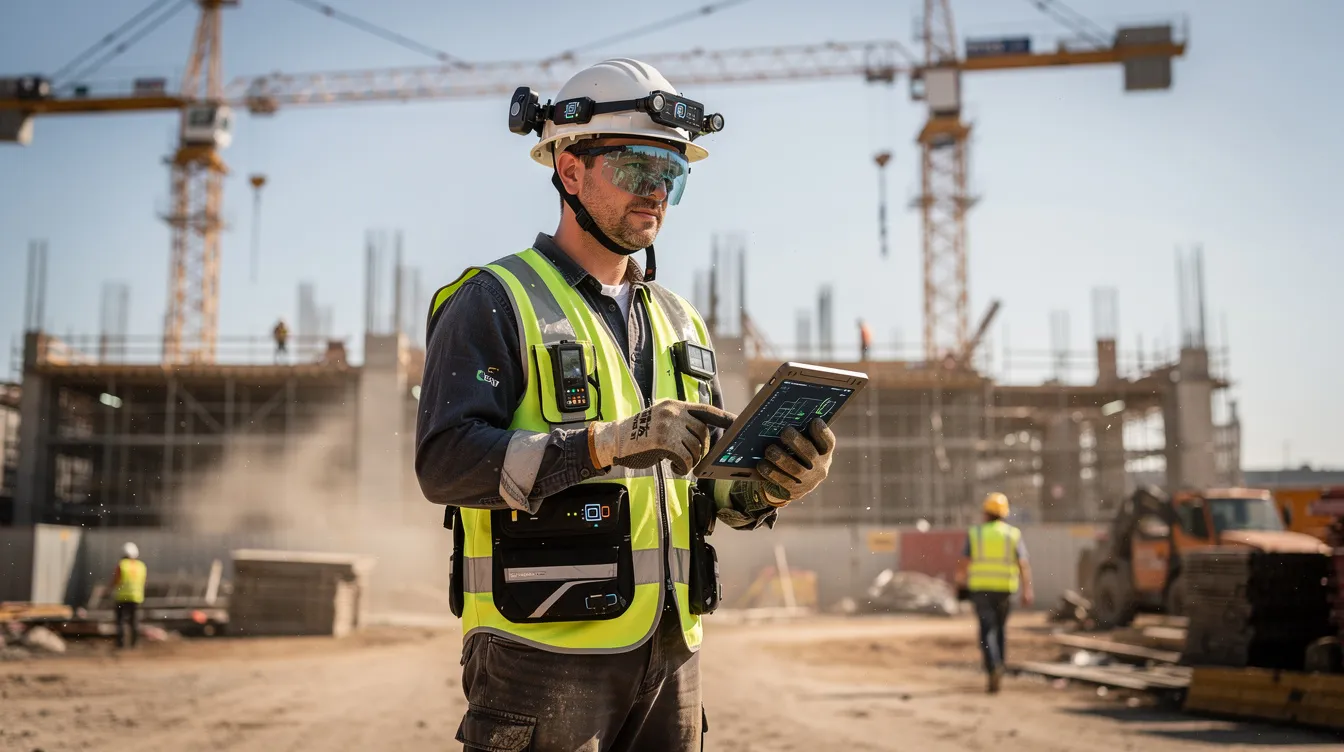
Implementing wearable technology is one of the most visible and impactful innovations in construction safety. Everyday gear—like helmets, vests, glasses, and gloves—is now embedded with biometric sensors, GPS, and IoT connectivity.
Wearable technology transforms standard passive equipment into an active, data-driven defense system worn directly by the workforce.
This technology monitors workers’ health, location, and immediate risks in real time, turning standard Personal Protective Equipment (PPE) into active risk-mitigation systems. Worn directly by workers, these devices are designed to prevent accidents, reduce injury severity, and drastically cut emergency response times.
- Smart helmets and hard hats:
- Upgrade standard head protection with embedded impact sensors.
- Provide instant fall-detection alerts directly to risk managers.
- Integrate SOS buttons for manual emergency broadcasting.
- Enhance situational awareness near high-voltage lines.
🪜 Case in Point:
OSHA requires fall protection at elevations of 6 feet, and smart helmets give risk managers the field data they need to enforce that standard effectively. Beyond fall detection, they also improve daily situational awareness by alerting workers when they step dangerously close to live power lines or heavy equipment blind spots.
- Connected safety vests:
- Feature high-visibility LED illumination arrays.
- Implement motion-based "man-down" detection logic.
- Leverage geofencing to trigger alerts when entering restricted zones.
- Prevent dangerous incursions near mobile heavy equipment.
- Ensure supervisors always know their crew's exact positions.
- Wrist wearables and smart badges:
- Track real-time heart rate and vital sign fluctuations.
- Detect early physiological indicators of fatigue and dehydration.
- Issue discreet warnings to workers prior to physical exhaustion.
- Ergonomic Exoskeletons:
- Provide structural mechanical support during heavy lifting.
- Absorb repetitive strain during prolonged overhead drilling.
- Minimize long-term, costly chronic musculoskeletal injuries.
Spatial IoT and Environmental Sensors
While wearables track the human body's vital signs, site-wide device arrays monitor the surrounding workspace for air quality, noise, vibration, and temperature. These sensors capture invisible ambient hazards, such as gas leaks, silica exposure, noise levels, and severe weather shifts, in real time.
- Localized Environmental PPE Sensors:
- Monitor localized air quality inside tight, confined spaces.
- Detect low-level exposure to toxic gas, silica, and asbestos.
- Measures cumulative noise dosimeter thresholds to prevent hearing damage.
By bringing IoT down to the individual level, gear equipped with localized hazard detectors provides early warnings of unsafe conditions at a construction site.
🪜 For example:
Sensors on cranes, power tools, and temporary electrical systems track load, vibration, and temperature to help prevent equipment failures and protect workers from electrical hazards near power lines and telecommunications systems.
- Proximity Detection Systems:
- Pair heavy machinery sensors with worker wearable tags.
- Establish real-time, dynamic digital buffer zones around equipment.
- Trigger automatic machinery shut-offs if a worker enters a blind spot.
Utilizing IoT sensors placed on both workers and heavy machinery, these systems prevent fatal struck-by incidents by triggering alarms—or even automatically disabling equipment—when a worker enters a machine's blind spot.
Predictive AI Analytics and Automated Risk Monitoring
Traditional safety relied on manual inspections, paper forms, and lagging indicators. Today, AI-powered computer vision and predictive software analyze site conditions to instantly identify risks, such as restricted zone breaches or missing PPE.
- Computer vision: Fixed and mobile cameras combined with machine learning detect missing PPE, unsafe proximity to equipment, and blocked emergency exits. AI systems provide real-time alerts for missing PPE and analyze data to identify risk patterns.
- Predictive analytics: By combining historical incident trends with real-time environmental data like heat and humidity, predictive systems forecast risks before they materialize. Teams can use data from proximity sensors and near-miss analysis to focus safety efforts where they are most needed.
By unifying biometric monitoring, real-time location tracking, and environmental hazard detection, these interconnected devices make risk prevention a proactive standard that keeps workers safe in high-risk environments.
Prioritizing Data Privacy and Worker Trust
Transparent policies that clearly state what data is collected and how it will be used are essential to build trust and strengthen a genuine safety culture. Because health administration guidelines often limit the collection of personal biometric information, securing clear worker consent and enforcing strict, role-based access to this data are non-negotiable. This oversight must also extend across your entire workforce, as organizations need to track which subcontractors adopt wearable technology under their specific contracts.
Automating Heat Stress Management
Combining personal wearable data—such as real-time heart rate and activity levels—with localized environmental sensors creates a powerful defense against heat exhaustion. This integrated technology actively monitors extreme working conditions to trigger automatic alerts, recommend immediate rest breaks, and intelligently manage safe work-rest cycles. By shifting from manual observation to automated, data-driven oversight, companies can proactively protect construction workers from severe heat-related illnesses before symptoms ever begin.
Managing Regulatory Risk and Data Governance
Real-time alerts significantly improve emergency response times on construction sites, directly reducing the likelihood and severity of workplace injuries. Beyond immediate physical protection, digital logs and centralized dashboards help mitigate the heavy administrative burden of regulatory risk.
🪜 For example:
Employers are strictly mandated to maintain written hazard communications for chemicals and conduct regular machinery inspections; digital tools make documenting and enforcing these OSHA standards far more efficient and accurate.
However, as job sites increasingly rely on these interconnected platforms, robust data governance becomes paramount. Safety camera footage, personal biometric data from wearables, and sensitive contractor records must all be handled securely to ensure strict alignment with privacy regulations and internal policies.
Integrating Wearable Tech with Contractor Oversight
In construction, most risk flows through the supply chain.
With subcontractors executing up to 90% of physical labor on major commercial sites, even the most advanced wearable technology will fail to prevent accidents if those third parties aren't properly prequalified.
You can equip a job site with the most advanced smart helmets and proximity sensors on the market, but if the subcontractors wearing them aren't properly prequalified, your risk management strategy falls apart.
Today, smart safety technology must be tied directly to contractor prequalification.
By utilizing AI-native systems that automatically verify insurance certificates, specialized safety training programs, and OSHA citation histories, risk managers can guarantee that every third-party worker meets strict safety standards before stepping onto the site.
🛠️ Risk Tip:
Incorporate smart technology requirements directly into contractor prequalification workflows. For example, mandate specific wearables or VR safety training modules for high-risk tasks as a prerequisite for contractor approval.
Building a Proactive Risk Culture (And the ROI to Prove It)
To maintain a truly proactive culture, continuous risk monitoring must take over by pulling data directly from the field. By aggregating daily signals—merging wearable incident trends and expired PPE certifications with lapsed insurance and regulatory changes—the right systems issue proactive alerts to risk and operations leaders.
Navigating Regional Safety Regulations
This continuous oversight is especially critical given the modern regulatory maze. With at least 22 states having their own OSHA standards, US construction firms operating across regions face a massive hurdle in tracking localized regulatory changes.³ Intelligent risk monitoring platforms bridge this gap, ensuring that the alerts triggering on a worker’s smart vest actually align with the exact safety mandates of that specific state.
Ultimately, wearable tech generates the data, but continuous risk monitoring turns it into action. Measuring ROI of the integrated risk ecosystem comes through fewer lost-time injuries, lower insurance costs, reduced rework, faster incident investigations, and more efficient contractor prequalification.
When your smart devices and contractor compliance systems actually talk to each other, you stop merely recording job site hazards and start engineering them out entirely.
Let's Turn Industrial Risk From Historical Reporting into Predictive Intelligence
Connect wearables to a single, audit-ready risk framework that neutralizes site hazards before they become lost-time claims. Schedule a demo to see how Parakeet Risk can support your smart jobsite technology roadmap.
References
- U.S. Bureau of Labor Statistics. (2024, December 19). Census of Fatal Occupational Injuries News Release - 2023. United States Department of Labor.
- Shrestha, K. B., Gairhe, S., Bist, A., & Rawal, M. (2025). Occupational Health Knowledge and Safety Practice Among Hydropower Construction Workers in Nepal: A Cross‐Sectional Study. Health Science Reports. PubMed Central.
- Occupational Safety and Health Administration (OSHA). "State Plans." United States Department of Labor.
- International Labor Organization. (n.d.). Home page.
Frequently asked questions
What does construction safety technology cost, and how can companies budget for it?
Costs vary: smart hard hats may run several hundred dollars per unit, while analytics platforms typically use subscription models. Site infrastructure (cameras, sensors, networking) adds to upfront costs. ROI typically comes through fewer workplace accidents, lower insurance premiums, and streamlined compliance work.
How is data from wearables and AI cameras handled, and who owns it?
Employers typically own safety data, but clear privacy policies and worker consent are essential. Best practice is to use aggregated data to improve safety rather than to monitor individuals. Alignment with health administration guidance and data protection rules-including state privacy laws-ensures the work environment remains one of trust and well being.
Can small and midsized contractors realistically adopt advanced safety technology?
Yes. Even smaller construction firms can start with targeted tools like safety apps, a limited set of wearable tech, or rental sensor kits. Client and insurance demands increasingly require demonstration of workplace safety technology. A phased approach-starting with the highest-risk areas-lets smaller companies find immediate value and scale as resources allow.
How do OSHA regulations interact with new technologies like wearables and AI analytics?
OSHA regulations focus on outcomes and safe work practices. Digital tools make compliance easier by documenting inspections, safety training, incidents, and PPE use. OSHA's advisory committees are actively developing guidance on AI and drone use.
Where should we start if we want to connect our safety technology with contractor and supplier management?
Begin by inventorying existing tech and safety requirements. Embed clear expectations into contracts and prequalification questionnaires. This approach creates a safer work environment while transforming job sites into better-managed, lower-risk operations.

Written by
The Parakeet TeamField notes from the people building continuous risk engineering for industrial operations.